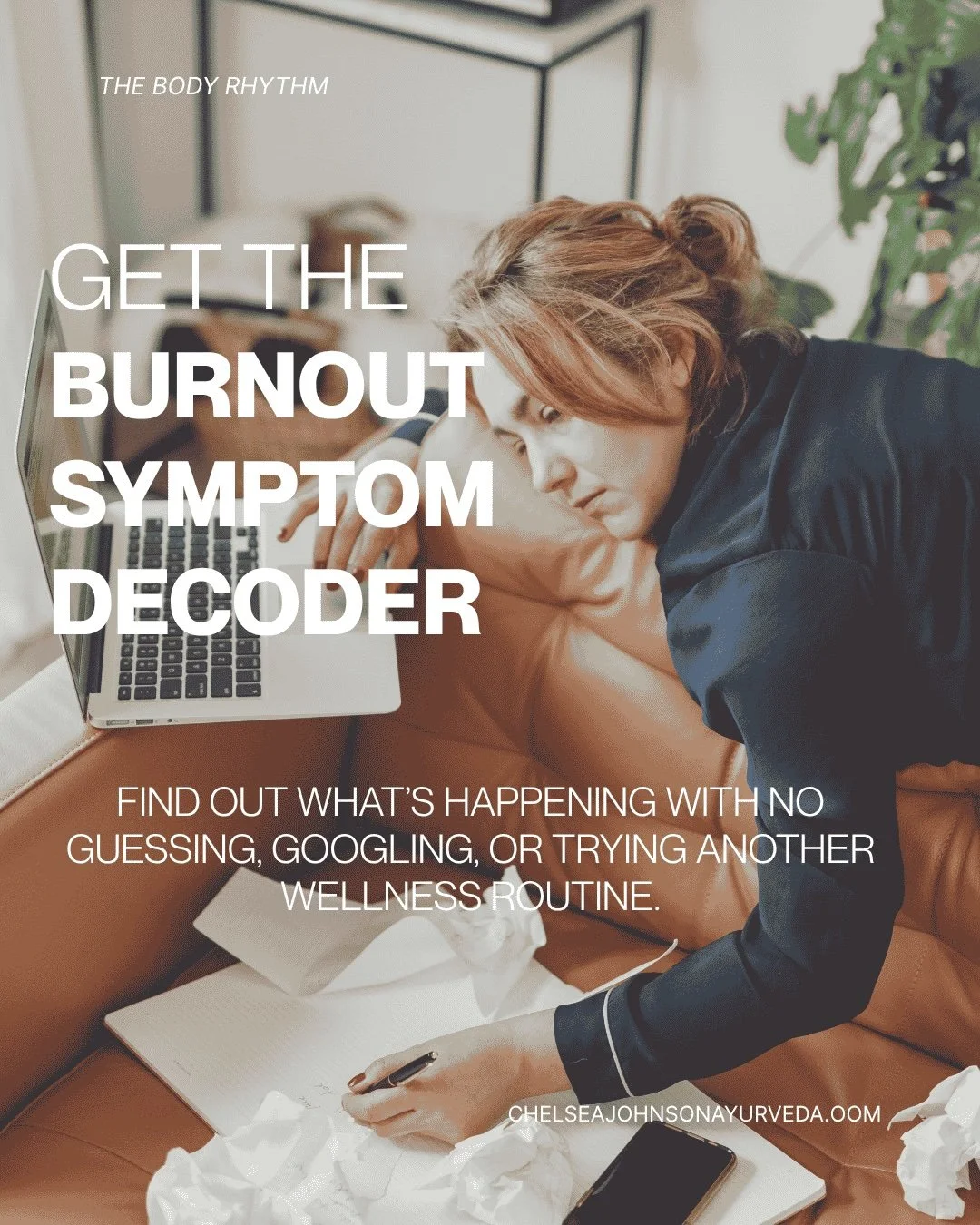
The Stress You Don't Recognize Is the Hardest on Your Body
You look fine. You're functioning. And underneath all of it, your nervous system hasn't stopped running in years.
I've been sitting with something this week that I think a lot of us don't have language for — the kind of tired that doesn't make sense on paper. Nothing is technically wrong. And yet the body is carrying something. That's what this issue is about.
What Your Body Knows
Over the past couple of years, I've been going through my own experience of hidden stress — and it wasn't one big thing. It was the accumulation of small and mid things. Caregiving responsibilities that never fully stopped. The mental load of holding everything together for other people. The constant switching between teacher and practitioner and caregiver and employee, sometimes all in the same afternoon. And what I noticed was that even in quiet moments, my body didn't actually quiet down. I'd sit down to rest and my mind would still be running through everything that happened and everything that still needed to happen. I'd wake up already thinking about what I didn't finish the day before. The stress wasn't loud. It was just always there.
And here's what I want you to hear from that: most women don't recognize this kind of stress as stress at all. We just call it life. We call it being busy. We call it having a lot going on. But your body doesn't make that distinction. Your body is communicating with you constantly — about what it needs, about what it's holding, about when it's in balance and when it isn't.
Most women don't recognize hidden stress as stress at all — they just call it life. But your body doesn't make that distinction. Here are three reasons why what you've normalized may be quietly draining you.
The bottom line: Your body isn't failing you. It's been trying to tell you something.
Reason #1: The Accumulation Is the Problem — Not Any One Thing
This is the part that makes hidden stress so hard to catch.
If someone asked you right now, "What are you stressed about?" you might not have a great answer. Nothing feels extreme. Nothing feels like a crisis. And that's exactly why this kind of stress stays invisible for so long — because we've been taught to look for the obvious thing. The deadline. The conflict. The big event.
But hidden stress doesn't usually come from one big thing. It comes from accumulation. From the way your attention is constantly being pulled in different directions. From the number of decisions you're making all day long. From never fully completing one thing before moving to the next. From the mental load that runs quietly in the background of every conversation, every meal, every moment that was supposed to be rest.
That constant output — day after day, month after month — is what accumulates into the exhaustion that doesn't fully go away even when you rest.
Reason #2: The Always-On Body Has No Off Switch
Here's what's happening underneath all of that accumulation.
Your nervous system is adapting. It's saying, okay — we'll stay alert. We'll keep going. We'll hold this together. And it does. Remarkably well, actually. But in doing so, it never gets a clear signal that the effort is over. There's no real shift from doing to resting, from output to recovery. And so the stress doesn't resolve. It just carries over. To the next day, and the next, and the next.
This is why you can feel that tired-but-wired feeling — restless but exhausted, ready to collapse but unable to fully relax. Because your body hasn't actually exited the stress response. It's still in ready mode. Still braced. Still on.
And over time, that activated state starts to feel so normal that you stop noticing it. It becomes your new baseline. Your body tightens around it. It adjusts. And you start to think — maybe this is just how I am. Maybe this is just what life feels like now.
But it isn't. It's a nervous system that has been running without a real break for a very long time. And it's asking — not for a vacation, not for a dramatic life overhaul — but for a signal. A moment where it registers: I'm done. I can let go. I can come out of this state.
Reason #3: The Absence of Completion Keeps the Stress Alive
This is the piece that most conversations about stress completely miss.
It's not just the doing that keeps you stuck. It's the never finishing. The never landing. The way everything blends into everything else — morning into afternoon, work into dinner, evening into sleep — with no clear moment where your body gets to register: that part is complete.
Without those moments of completion, your nervous system keeps the loop open. It stays in a state of low-level activation, waiting for the resolution that never comes. And that unresolved activation is what shows up in your body as tension you can't explain, sleep that doesn't restore, digestion that feels off, energy that never quite arrives.
What actually helps isn't doing less in some dramatic way. No 2 week vacation in the Maldives! It's creating small moments of completion and reset throughout your day. A pause between tasks before jumping to the next one. A breath between responding and reacting. A few minutes in the evening where nothing is required of you — where your body gets to feel the edges of done.
Your body needs signals. It needs to feel: this is complete. That part is finished. Now we can shift.
This is where practices like yoga nidra become so much more than relaxation. They're not just giving your body a break. They're teaching it a new pattern — that it's safe to soften, safe to stop, safe to let go.
And that, more than any productivity hack or wellness trend, is what begins to resolve the stress that's been quietly running underneath everything.
What would it feel like to end your day with your body actually knowing it's done?
Good Medicine This Week
Here's what's had my attention lately.
🎧 Always 'Fine' But Still Tense? You're Not Relaxed — You're Coping
My latest episode of The Body Rhythm. This week’s episode goes deeper into what hidden stress actually looks like day to day — and why it's so easy to miss. If something in this issue resonated, the episode will take you further. Find it wherever you listen to podcasts.
Know someone who needs this conversation right now? Send them this week’s episode. And if you haven’t already, following the show helps support The Body Rhythm and keeps these conversations growing.
And if you’re wondering what stress pattern your body might be stuck in, take my free 2-minute quiz: Why Is My Gut Always Off?
What Rhythm Actually Looks Like
The most powerful shift I've seen in women working through this kind of hidden stress isn't a dramatic one.
It's the moment they stop waiting for life to slow down and start creating small pockets of completion inside the life they already have. A pause at the end of a task. A breath before the next thing. An evening practice that tells the nervous system the day is actually over.
These aren't indulgences. They are signals. And your nervous system responds to signals more than it ever responds to willpower or intention.
In My World Right Now
I've been in a quiet season of my own recovery lately — more intentional evenings, more warm meals, more moments of actual completion before I move to the next thing. It's slower than I'm used to. And my body is grateful for every bit of it.
I’ve also spent time with friends for a Spring garden party! It was the perfect time to get dressed up and spend time with each other. This type of connection is exactly what signals to the body that it’s safe. And it’s fun too 😀
I am working on filming short embodiment videos for high-capacity women who are quietly exhausted. Stay tuned!
Before you go — If the quiz is calling your name, now is a great time. It takes just a few minutes and it might be the most useful thing you do for your digestion this week. 👉 Take the quiz here
Be well and nourished,
Chelsea
P.S. Does your body ever actually get a clear signal that it's safe to stop? Not sleep — a real moment of done. Hit reply and let me know.