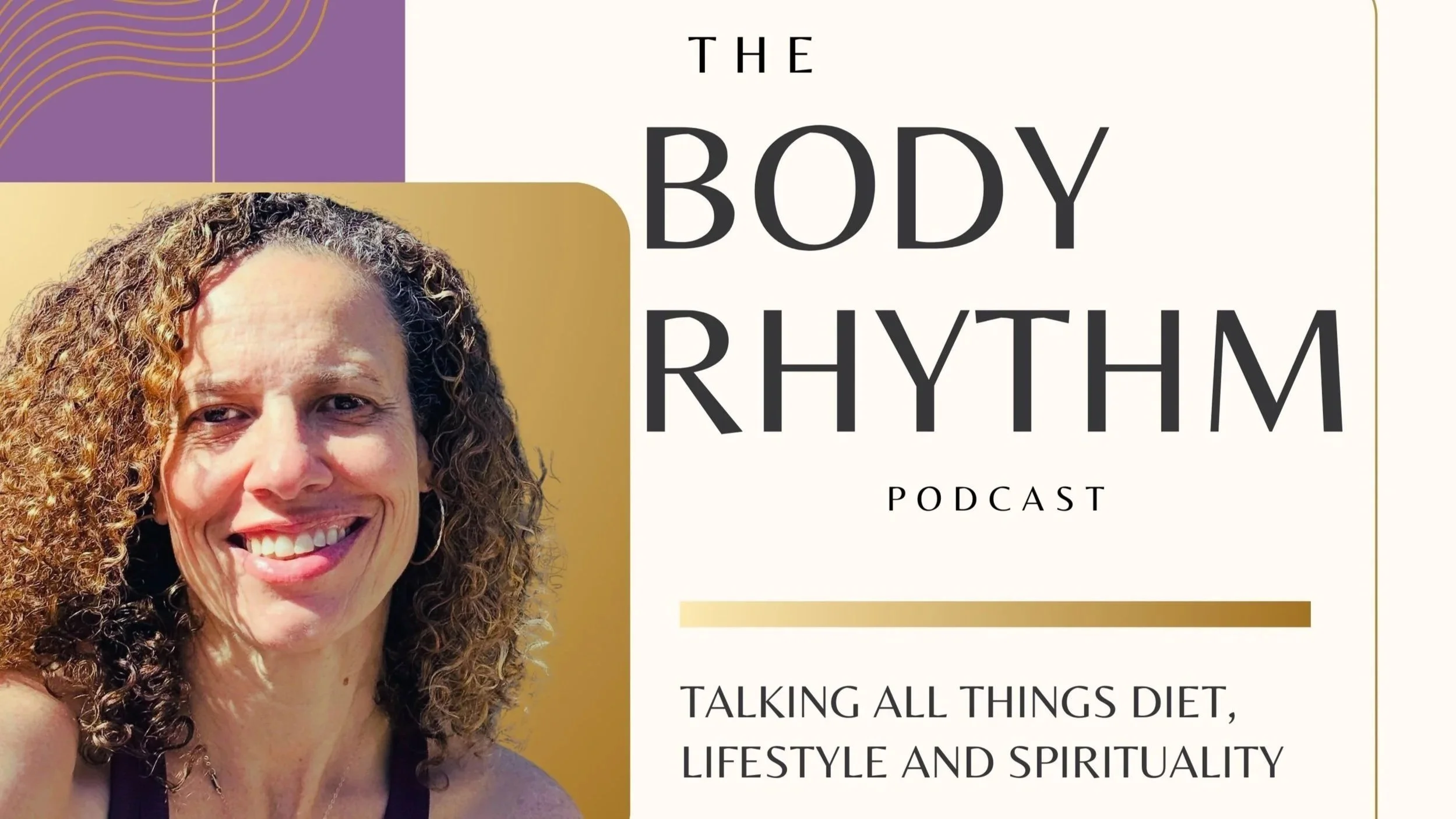
The Body Rhythm Podcast
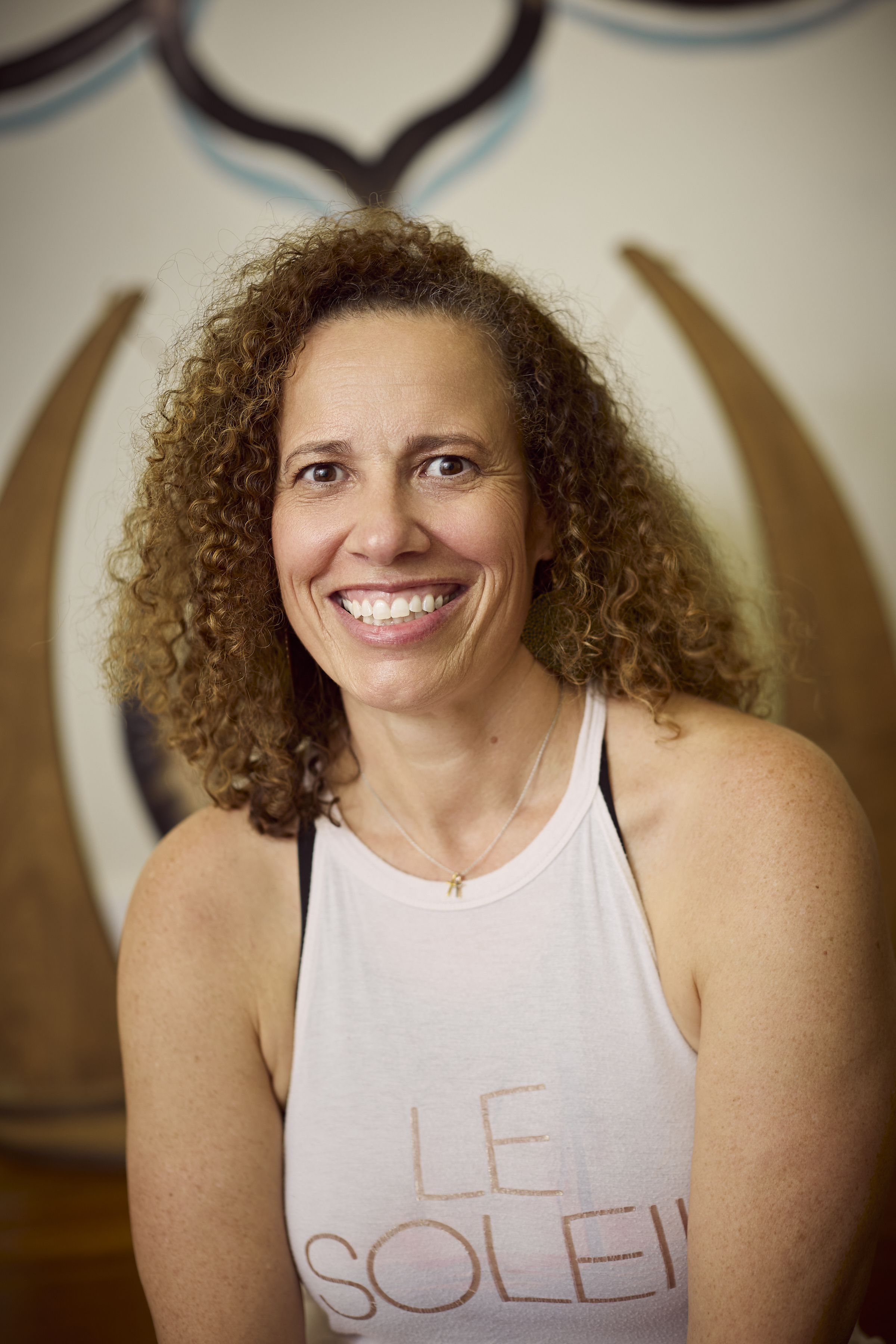
with Chelsea Johnson
The Body Rhythm is a podcast for women who are doing everything right and still feel like something's off. Each episode blends Ayurvedic wisdom with nervous system science to help you understand why your body feels exhausted, wired, or stuck — and what to actually do about it.
Whether you're dealing with burnout, digestive issues, hormonal imbalance, or just a persistent feeling that you've lost your rhythm, you're in the right place.
New episodes Thursday.
Start Here
Most Recent Episodes
Sleep All Night But Still Tired? The Real Reason Your Body Isn’t Resting| Episode 15
If you're waking up exhausted, running on caffeine, and still can't seem to catch up on rest — this isn't a willpower problem. It's a nervous system problem. In this episode of The Body Rhythm podcast, Chelsea unpacks the real reason so many women feel wired but depleted, and shares simple, grounding practices to restore energy from the inside out.
What You'll Take Away from This Episode:
Rest and distraction are not the same thing. Scrolling, binge-watching, and staying busy with self-care can all keep the nervous system in an alert state — meaning you never truly recover. True rest requires actual stillness, not just a change of activity.
Your digestion is draining your energy. In Ayurveda, your digestive fire — agni — processes not just food but emotions, stress, and mental stimulation too. When it's overloaded, fatigue, bloating, and brain fog follow. Warm, cooked, easy-to-digest meals are one of the gentlest ways to start rebuilding energy.
Small morning rituals can reset your whole day. Warm lemon water, tongue scraping, a hand over the heart — these aren't trendy hacks. They're simple signals that help the nervous system shift out of survival mode before the day even begins.
Lengthening your exhale is one of the fastest ways to regulate your nervous system. You can do it standing in line, at your desk, in the car. Even extending the exhale by one count starts moving the body toward rest-and-digest.
Your energy leaks are information. Whether it shows up in tight shoulders, emotional overwhelm, or the inability to make decisions — your body is communicating. This episode includes a short guided practice to help you locate where your energy is draining and identify one small thing you can say no to.
There is a fatigue that no coffee can fix. But there is a rhythm that can restore it.
Listen to Episode 15 of The Body Rhythm wherever you stream
You’re Not Meant to Do This Alone—Why Burnout Feels So Heavy| Episode 14
If you are the steady one — the person everyone leans on, the one who holds it all together without anyone noticing — this is the episode you didn't know you needed. Burnout isn't just about a packed calendar. It's about carrying everything without enough support. And your nervous system is quietly paying the price.
What You'll Take Away from This Episode:
Hyper-independence is a nervous system pattern, not a personality trait. When self-reliance has felt safer than asking for help, your body learns to stay in survival mode — and healing becomes much harder to reach from there.
Isolation affects your body, not just your mood. When we go it alone for too long, digestion slows, exhaustion deepens, and stress gets locked in the body. Connection isn't a luxury — it's biological medicine.
Your nervous system is wired for co-regulation. We literally calm down in the presence of safe people. This is why healing accelerates in relationship — and why trying to recover from burnout in isolation often keeps you stuck.
Community isn't about having a lot of people — it's about having the right ones. You don't need to be vulnerable all at once. Trust builds slowly, through rhythm and repetition — just like everything else in the body.
You don't have to do this alone anymore. A simple, low-pressure framework for beginning to rebuild your support system — even when connection feels like one more thing to manage.
You do not need support because something is wrong with you. You need it because you are human — and your nervous system was never designed to carry this much alone.
Burnout shifts when your body feels safe. And safety is built in relationship.
Read this week's full post → The Body Rhythm Blog
Every week in The Body Rhythm newsletter I share one practice, one reframe, and one small thing your nervous system actually needs. If this resonated, you'll feel at home there.
Join the newsletter → Here
Wired and Tired? Why You Feel Exhausted But Can’t Relax| Episode 12
Why Nothing You've Tried for Burnout Has Actually Worked (Until Now)
You've tried resting more, eating cleaner, meditating, setting boundaries — and still feel exhausted. If none of it has stuck, it's not because you're doing it wrong. It's because every piece of advice you've been given is treating the symptoms. This episode is about the root cause nobody talks about.
What You'll Take Away From This Episode
The real root cause of burnout isn't what you think. It's not poor sleep, a bad diet, or lack of boundaries. Those are symptoms. The root cause is a nervous system stuck in survival mode — and until that's addressed, nothing else fully works.
Common advice fails because it demands behavior change from a dysregulated system. Telling someone in burnout to just rest, exercise, or meditate is like trying to have a calm conversation with someone being chased by a bear. Safety comes first.
You can't think your way out of this. Top-down approaches — positive thinking, willpower, logic — don't work when your survival brain is running the show. What works is bottom-up: sending safety signals to the body first through gentle movement, breath, touch, and nature.
Eating healthy isn't enough when your nervous system is dysregulated. You can eat the cleanest diet and still bloat, still struggle with digestion — because a stressed body can't properly absorb or process food. Nervous system regulation has to come first.
Healing is not linear — and that's not a setback. Good days and hard days are both part of the process. Progress isn't about never struggling. It's about recovering faster and meeting yourself with more compassion each time.
Your Digestion Isn't Broken — It's Communicating| Episode 9
If your digestion has felt sluggish, bloated, or just plain unpredictable lately — and you've already tried cutting out foods, adding supplements, and eating "clean" — this episode is for you. The truth is, your digestion is deeply tied to your nervous system. And when life gets heavy, your gut feels it first.
What You'll Take Away From This Episode:
Digestion is a stress problem. When your nervous system is in fight-or-flight mode, your body redirects its resources away from digestion. Bloating, gas, and heaviness aren't a food problem — they're a regulation problem.
Your appetite is a signal, not a failure. Eating less when you're stressed, or feeling like even a "healthy" meal is too much? That's your body asking for simpler, lighter, warmer support — not a stricter protocol.
Warm, wet, and moist wins every time. Soups over salads. Cooked over raw. These aren't setbacks — they're intelligent adaptations your body has been asking for all along.
Safety comes before digestion. Simple practices like inhaling the aroma of your meal, offering a quiet moment of gratitude, or placing a hand over your heart before you eat help shift your body from sympathetic to parasympathetic — so your system can actually absorb and rest.
Curiosity over correction. Instead of asking what am I doing wrong, try asking what is my body telling me right now? That shift — from control to listening — is where real healing begins.
Digestion doesn't need more rules. It needs more rhythm, more warmth, and a nervous system that finally feels safe enough to rest.
You Are Not Lazy — You Are Exhausted The Body Rhythm Podcast | Episode 8
Why You Feel Exhausted No Matter How Much You Rest (And What to Do About It)
If you've ever found yourself lying on the couch, unable to move, wondering what is wrong with me — this episode is your permission slip. Exhaustion that rest doesn't fix isn't a willpower problem. It's your nervous system running on empty. And there is a real difference between being tired and being truly depleted.
What You'll Take Away From This Episode
The "laziness lie" is keeping you stuck. Hustle culture taught us that stillness equals failure. But what looks like laziness is often your body's emergency brake — a survival signal asking you to stop before actual collapse.
Tired and exhausted are not the same thing. Tired is acute — you sleep, you recover. Exhausted is chronic. When rest stops restoring you, that's depletion. That's your nervous system in survival mode, not a character flaw.
Chronic stress hijacks your whole body. When you're depleted, your body diverts resources away from digestion, hormonal balance, and immunity — all to keep you "safe." Bloating, brain fog, low libido, and irregular cycles? Often connected to this one pattern.
Willpower runs out. Nourishment doesn't have to. You can't force your way back to energy. But you can receive your way back — through rest, rhythm, and learning to listen to what your body is actually asking for.
A simple practice to start right now. Place one hand on your heart. Notice your breath. Notice your heartbeat. Ask yourself: What is my medicine today? This small pause is where healing begins.
Episode 6: Healing the Heart After Pain: How to Release the Past and Move Forward
I wanna talk a little bit about transformation of our victim mindset,
and so when we perceive ourselves as a victim. It really is our ego incorrectly perceiving what is happening to us and in this moment, and what is being a victim look like. Maybe it is someone else is to blame or they don't like me. Or that person made me mad or sad or angry.
It really is our own identity being created by our ego.
But some of us have attachment to being the victim. Can we begin to appreciate. Our past without staying in the past. We begin to get stuck if we continually relive moments from the past and we can't let go.
I dunno if you've ever gotten into that loop where you continually replay events of the past thinking what happened? Or thinking what could have happened if you made different choices or how silly the one choice you made was as kind of getting stuck in this repetitive loop of the past. Some people, and it depends where we are in life too, are more comfortable. Staying with the old hurts, with the old wrongs. If they let go of those things, then who are they?
Can they be someone new? Most people don't want to be someone new. They want to be comfortable, and so they stay with. The old hurts and the old wrongs, and they rage against those that have wronged them and they rage against God. And they rage against the emotions that are brought up and they rage against the feelings.
And even though that might be destructive, it's what they know. It's what we know and it's comfortable.
However, if we begin to accept our past experiences, our past hurts, our past wrongs, I think that we begin to move forward. We can move forward towards something new, towards something better, and we begin to. Achieve freedom. The past can sometimes feel like chains holding us down or bounding us, but what would it feel like for you to be truly free
Freedom from old hurts, from old scars, from the old pain.
Some people, it's more comfortable to remain in the pain because it's what you know. Maybe it's where you flourish. Pain can be where we've learned to survive.
It can be how we've gotten through the situations in the past, and so we learned how to deal with things in a previous way, and that influences how we move through situations in the present
if we're in a victim. Narrative. It's how we survive. It's how we get through the mundane, our daily activities of waking up, of putting on clothes, of going to bed, of having relationships. That's what's most comfortable. And if we get rid of the past or the hold of the past. Or get rid of the hold that the past has on us, then maybe we feel like we have nothing.
Poof, it's gone and then nothing is there. The challenge is appreciating our past experiences that have made us who we are. Because, look, the past has taught us lessons good, bad, and ugly sometimes. The past has taught us how to survive difficult situations.
It's taught us how to make better decisions moving forward. It's taught us things to learn from or let go or try differently.
But can you leave the past behind and keep the things that it's shown you to live? And then the question becomes, are you ready to live? Do you have the courage to let the past go? And I am not suggesting that you forget, right? We are creatures whose each past choice is part of who we are. It makes up who we've become in this moment.
Each past experience is a part of us, but does it have to be a part of our future? If we suffered some type of abuse or trauma in the past, can we recognize that that happened without bringing those feelings of hurt and victimhood into our future? And really only every person can answer that for.
Themselves, and it depends on the tools that we have to aid us in letting go. It, um,matters what our community looks like. Our friends, our support.
Have you ever thought about how often. Your memories can hold you hostage. Do they creep up throughout the day and then we become a hostage to those memories or to the feelings that the memories bring up? We become a hostage to the pain, and when we become a hostage to the pain, then. We do things to escape, to run away.
We go to new cities or we engage in frivolous activities, or we drink, or we do drugs, or we have lots of sex, or we sleep till noon and we become a shell of an existence, a shell of a life, a shell of our humanity. And then the past becomes a prison of belief in a sense that we are stuck without the knowledge or the desire to change because we're more comfortable with what we know.
We don't wanna feel uncomfortable.
But do you wanna be stuck to the same spot that you were 20 years ago? Right. Maybe the location has changed or the people around them have changed, but you are still
the same.
Do you think that the best days are behind or in front of you?
We all have a choice about if we wanna move forward. Do you wanna relive the coulda, whata should us. Or do you wanna begin to think about what you are really wanting for yourselves and how you want it? It takes a leap of faith. The world is in turmoil, all of around us, but we do have each other. We can rely on each other.
Can you look forward and see happiness? See joyfulness. Can you let things go?
Or maybe is there attachment? There? Attachment to being the victim, but we can create our own reality with every thought, with every choice we can create. A better future. You can choose not to be led by your ego or by fear,
but you can be a pioneer. If we think about the American pioneers, they went off into the unknown, into the unfamiliar because they were intrigued by what could be. That it could be better than where they were.
So if you think about it, what are you wanting from your life today?
Maybe you take a few minutes in bed before you rise in the morning, put a hand over your heart. And ask yourself, what do you want your day to look like?
And begin to recognize the answer that comes to you. Recognize how your body feels . What do you want your day to look like?
And maybe the answer comes to you pretty quickly. I don't think any of us wake up out of bed and say, I really want my day to be like shit. And I really wanna have an argument with my boss or my significant other, and I really want my car to break down, and I really just wanna be depressed all day. I don't think that's what any of us are waking up and wanting for ourselves, even though it might feel like that when we get started and have one of those days where just everything goes wrong.
That's why I think it's really helpful to start the day off before your feet touch the floor in bed to ask what do I want my day to look like?
When we begin to change the story in our minds, we begin to change our life. This is just a gentle way to begin to look at what ways might you be stuck in the past story that your mind is telling you, and maybe what are some ways to begin to move forward, even if it's at a glacial step, to get out of that victim narrative to begin to become nourished and balanced and living in harmony with our inner self and with our outer self.
When we stop blaming others for where we are. And we recognize that the past has had an impact on the person that we are today. Every past choice leads to where you are in this moment, but can we realize that what you've done in the past or what may have happened to you in the past doesn't have to limit your ability to find joy or happiness or nourishment or balance in the future. This is the gift
Episode 5: How Fear Affects the Nervous System (and How to Move Forward Without Letting It Control You)
Today we're talking all about fear. What is fear? Where does it come from, and what are some steps to begin to let it go? To live a more fulfilled and balanced life. When a crisis hits, that's too late to take action. The reservoir of our knowledge is depleted if we haven't built it up before the crisis hits.
It's impossible to be calm when we are surrounded and panic, and unfortunately we're trying to build things in a storm and it's just leaving us more overwhelmed, more unsure, more unsettled. So fear, I like to think of as a virus, it can destroy more than any other virus, more than the flu or the common cold.
I think we've all been afflicted with it at one time or another.
Fear can immobilize us. It can stop us from getting on a plane or opening a business or writing a book, or taking up a new hobby. Going to a new restaurant, ordering a new dish at the restaurant. I was just having this conversation with a friend of mine that we always tend to order the same things and don't venture to anything new.
So fear can keep us stuck in the same patterns with the same outcomes. Fear is not [00:02:00] logical. It is illogical. It's based on our own past experiences on our own imaginations. It's not based in actual facts, but it's based in the facts that we create in our mind, the facts that our ego has created, but it's not the truth I don't know if you've ever had a situation where something happens and then your mind kind of runs away and it creates all of these different scenarios, each one kind of getting worse and worse until you're at the end of the road and the worst outcome possible has happened. Even though you're probably 10, 20 steps back and nothing like that has remotely happened.
It's happened to myself a lot, especially when I was younger. I used to create all of these horrible things that would happen, and nine times out of 10 it doesn't happen and I have to reign the thoughts back in to where we actually are. What's happening in the body during this time is fear really is an over stimulation of our central nervous system.
It is the nerves and anxiety and feelings of overwhelm have gone haywire. In Ayurveda, this would be called an imbalance in Vata dosha. When everything is going haywire, it's much more difficult to bring it back in to balance. So we try to begin to recognize our inner patterns, our patterns with fear.
If we hold on to fear. It can lead to guilt or regret or shame, and if we haven't dealt with fear, it can begin to consume us from the inside out. If we are consumed with fear, then we allow it. To have an impact on our life, where it consumes us, where we don't trust ourselves, we don't trust others, we don't trust our life experience. It prohibits us from accomplishing things that satisfy our most inner desire, our most inner connection with what we are here on earth to do.
Fear can cloud or obscure happiness in our life. It can cloud or obscure joyful moments in our lives. It's hard to be a participant, fully present participant in our life when we are consumed with fear we don't wanna feel fear. Fear can. Um, look like racing thoughts, anxiety, depression, lethargy, apathy, lack of appetite, or maybe even eating too much fear can show up as procrastination, controlling behavior. Constant worries. You know, there was. Something that happened to me a while back. I had been procrastinating on a project for about two weeks, and no matter what was happening, I just could not get it done.
And so it came to me when I was on a walk and walking tends to be where I do my meditation practice on life and what's happening and connection. And so it came to me on this walk that I was procrastinating because I was afraid of failure. And if I did this one thing, then I would be responsible for the success or failure, and I would be putting the outcome in my own hands.
And that was scary to me. I would be solely responsible and no one else, and responsibility for the good and the bad, that's what was leading to procrastination. And so really though, I wanted to take the steps to get to where I didn't wanna remain stuck and. If I didn't do anything, then I would stay stagnant, kind of stuck in the mud, moving nowhere, and so I decided to take a step, and maybe the step was a little bit slower than I had originally wanted, but I was still moving in a direction that I wanted to go.
And so procrastination for a lot of us can be a sign that we're in a fear state, and here in our Western culture. We are taught not to feel the emotions and the emotions of fear, especially we're taught to just plow through or go to the doctor who's got a pill for that. And I think this can lead to unrealistic expectations about having an amazing job, an amazing relationship, an amazing husband, amazing kids.
Uh, the perfect house, the Instagram ready cupcakes and birthday parties, and life is worthy of a magazine.
But really is that just fear of not being able to keep up with the Joneses,
is that, the fear of falling from social position, and so when is it okay. Or when do we determine for ourselves when it's okay not to have those things, to not feel like you have to keep up with everybody else? Do you give yourself permission not to have those things, or is the fear of not appearing perfect more weighing, more heavy for you.
Some of the things that we do to escape is we might watch TV or binge watch Netflix or indiscriminate sex or drugs or eating.
Why do we let fear rule our lives or drive our lives? Well, maybe it's our experiences as a kid. Maybe if we had an abusive parent. We keep carrying that fear within us. 'cause the feeling of fear can become embedded in us, in our bodies. If we were teased as a kid or maybe we failed, we have a fear of failing again.
All of these past experiences become embedded in us and can keep us in that sort of fear state and keep us from moving forward.
And successful people. And I'm not talking about billionaires or the ones with the most stuff, but successful people in life or at life overcome fear. They overcome fear for the greater possibility of what could be for the abundance of life. And if we're fearful, if fear is clouding our experiences, our experiences in this moment of our life.
How can we then be living an abundant life? Well, we can't because it doesn't feel good to be in a fear state fear and doubt are always gonna be there.
Our body houses the past. That clouds our perception of the truth.
Fear, it said, resides in the first chakra, the base of the spine, the root. Fear is there. It's a defender. It's a defender against what we're scared of. It's defending us from maybe ourselves so we don't expose ourselves or, or our ideas. It's fear of the good stuff happening.
So when you think of the defender in your own life, is fear hiding behind it? Or what would it look like if you offer up your thoughts to God? For God to become the defender. If you don't believe in God, then a higher source, maybe the universe, whatever resonates most, what would it feel like to offer up every fear that you have to.
Someone something else that has the capacity to take that on for you and defend against what you are most scared of.
How do we recognize when things are fearful? Well, you might tense up maybe in the shoulders, the back, you might bite your lip. Heartbeat might increase. You might begin to sweat more. Maybe the breathing is more rapid.
On the outside, we might have a look of calm, but the inner body is moving and it's reaching, and then the outer body, the mask that we have to the outside world and the inner body are not congruent.
So what are some tools to use to begin to look at fear in our own life and some steps to begin to let go of the fear? Well, we can become a witness to the fear with no judgment. We begin to recognize it. Say you have fear and anxiety and depression in one hand. You can look at it, you can recognize it, you can babysit it, and on the other hand is your determination to move forward the determination. Not to have fear clouding the life experience, and then we get better at not merging the two hands, not merging our determination with our fear and anxiety and overwhelm.
So that's a strategic use of our focus and attention. We look with compassion and love and kindness to those things that we are fearful of. And this is an example of weaving spiritual capacity into everyday life.
Notice the thoughts that are occurring to maybe begin one minute of the day, allowing yourself not to let fear or anxiety control you.
That's 60 seconds. It can begin with learning how to surrender, how to soften into the support of God. Maybe begin doing that by setting an intention for the day by being honest with yourself, by giving compliments to others, beginning to accept yourself and others. To begin to do an exploration of yourself first and then others, and then of your community, and then of the world.
It's beginning to have compassion for yourself, learning to be vulnerable with yourself.
So we can do a meditation on fear,
Come to a comfortable seated position and be here for a few minutes. And maybe allowing the eyes to close or the gaze to soften
wherever you are. The hands are resting heavy in the lap, palms facing up.
And bring awareness to the right palm
and imagine a ball there. Maybe it's a ball of light.
And you begin to put all of your fear, anxiety, overwhelm, depression into the palm.
Maybe you notice some sensations happening now that you've put all of that.
And that ball of light in the palm,
maybe you notice a difference in the weight of the palm. Perhaps it's become heavier,
just beginning to notice what fear feels like for you.
So you begin to gently hold all of that fear and overwhelm in the palm, and you recognize it and you're just holding it.
Then bring awareness to the left palm.
And the left palm is your determination.
It is the witness to the fear, but it's not connected. To the fear in any way.
The left palm is the intellect, the mind,
it's strategic focus.
And notice how. That determination feels in the left palm,
does it feel heavier or lighter in the right?
Maybe it feels bigger or smaller. Same size.
So now you have fear in one palm determination, strategic focus, intellect in the other,
and you're allowing yourself. To carry these two things at the same time, without them being merged into each other,
can you allow yourself to be open to the fear
without pushing it aside, without shoving it down, without ignoring it? Can you accept the fear that is there? At the same time, you accept the determination and the focus and the intellectual will,
and you hold these two things without them merging into each other. But they can exist at the same time.
You can move forward
towards what you're wanting while you still hold
the fear.
And maybe opening up the eyes, taking a look around the room. Maybe your eyes. Find something that's beautiful, a color,
be something that you haven't noticed in a while,
and take note of any sensations in the body that you're feeling now. Any differences?
Knowing that you can move forward in your day
and move forward towards. Abundant life.
Episode 4: Emotional Alchemy: Why Processing Emotions Matters for Women’s Health and Healing
Hello and welcome to the Body Rhythm Podcast, and today gonna be talking about all things emotional body, emotional experiences, and how does that impact our ability to move through life in a way that. Feels good. That is nourishing to the body and to our soul. And our spirit. And really, I was thinking about this because I saw a trailer for a movie called G 20 with Viola Davis, who looks amazing.
She's kicking ass. She's a tough, strong woman. And um. It just got me thinking. 'cause I think this is really what we're seeing in culture, in movies is this image of tough, strong women kicking ass and you know, that's wonderful. But there are so many more experiences. And qualities that women have that aren't attached to kicking ass, basically.
masculine and feminine, yin and yang, these are the masculine and feminine energies, and you can't have one without the other. I. And I think a lot [00:02:00] of the messages that we're receiving from culture is that you have to be a super woman without emotions, or the only emotion that you can have is to kick ass, go get it done, and then go have a drink with your friends at the bar and I don't think that that's realistic for most of us as we're living in our day to day experience. Women, we are unique creatures our physiology is unique, right? It's not male phy physiology, which has its own uniqueness, but there is a clear difference there and our Physiology affects our emotional experience, [00:03:00] and each of our emotional experiences is unique.
Your emotional experience is different from mine, and our experiences are different day to day, moment to moment, month to month. Year to year,
A few weeks ago I was at the Holocaust Museum in LA and went to go see a talk by a holocaust. Survivor, who was eight years old at the time of the Holocaust, and she was talking about her dad was gone and it was her and her mom, and they were on a march from [00:04:00] Hungary to Germany, and during this march her mom was taken and shot.
And killed. And she spoke about how she was just crying because her mom was gone. And she said there was another woman who was on the march who said, I'll take care of you. Come sleep with me. And, and then as she got to the camp, there were other women, women there who said, you can sleep with me. I'll take care of you.
Women that she would go to for comfort and nurturing. And then when the camp was liberated, she went to Sweden and was at a school and she spoke of the woman there who took care of her, her nurtured her, who was like her second mother. And [00:05:00] I really got to thinking, because these qualities, of love and nurturing and caretaking have really, I feel been put on the back burner as not important.
It's being told to us that these qualities aren't as important as achievement as kickass mode. Right. I can't remember the last movie that I saw where you had a strong mother figure who was nurturing and loving to her kids.. I think a lot of things that I've seen lately is like the parents are kind of sarcastic to the kids or more, so go get lost.
But, um, this kind of reminded me of the Mary Magdalene archetype, which is the archetype of a woman of love and compassion and redemption and archetypes really are representations of aspects of who we are. But those representations we might have qualities of, or they might exist outside of us. And so when I think about Mary Magdalene or what this woman experienced on her journey, I feel that we're missing in society.
That we're missing in our day-to-day experience. The feminine energy, the yen energy, that coolness, that peace, tranquility, compassion, nurturing, caring, those qualities aren't currently valued by the culture. But those qualities are necessary for how we process our own emotional experience. Think about it, if we're always in the masculine mode of do, do, do, of kick ass, of never taking a break, then we're not giving yourself any room to process the emotions.
We're not giving yourself any grace to feel the qualities that the emotion is bringing to our life experience.
And it's an honor. It's an honor to be a woman. It's an honor to be able to have these qualities of. Beauty and softness and nurturing and loving. It's an honor to be compassionate, even when life is asking you to eat shit. When it seems like everything is going against you. It really is an honor to be a woman and to bring these qualities into the world.
When we are emotionally unhealthy. We become rigid. I don't know if you can think of time when you've had a lot going on, maybe a very stressful situation. The natural inclination is to become more [00:09:00] tense, more rigid. If you've ever noticed when you're stressed, maybe you have a little bit more aches and pains, maybe you have a little bit more back pain, maybe a, some tightness in the shoulders and the neck, and that's the stress response, trying to get through the situation.
But then that turns off our tendency to feel. And so because we're just trying to get through whatever that situation is, the emotions get turned off. They get pushed down into what I call the void, that black pit of doom in the subconscious that. We push everything down that we don't wanna deal with. 'cause it takes energy to feel sensation. It takes courage to bring up things that don't feel good. And sometimes we don't have the capacity in that moment to feel the emotions. My. Dad, this past year and a half has been going through his cancer journey, and as I'm with him at the emergency room or in the hospital or talking to the doctors, that's not a good time to deal with the emotions, right?
I'm just trying to get things done to get the testing done, to see what's happening, what are the next steps, so. Feeling emotions, that's not the good time to do it. The the time to do it is when I'm able to take some time for myself away from the situation or after the situation has passed, and give myself time to sit and engage the senses.
If we've been under chronic stress for years and years or months and months, and we've just gotten used to pushing down the emotion to pushing it off to the side, and then the thought of bringing any of that stuff up can just be too overwhelming to deal with. So you just let it kind of sit there and sit there.
And sit there. But when we don't or can't work with our emotions, when we can't feel our emotions, then our emotional body isn't healthy.
But when we are emotionally healthy, we are able to feel things more. We can feel things more, even the hard things, but the hard things don't stay with us as long. When we're emotionally unhealthy is when you might get attached to the feeling or the situation and keep dwelling on it, and dwelling on it, and dwelling on it.
When you're depressed or feeling down, have you ever noticed that you might stay in that emotional state for a long time and it's really hard to let it go? When we're emotionally healthy, we can feel these emotions and we're not stuck with them as long we're able to let them go a little bit sooner. We don't hold on to that emotion,
and because we don't hold on to that emotion, we become more calm, we become more stable, we become more resilient. We expand our capacity, our threshold, our container of how much we can handle before we numb out and just crash.
So how do we know if we are emotionally unhealthy? Well, one way is by noticing how does the body feel? You know, there's that popular book called Your Body Keeps the Score,, and that's because the body absolutely is a gateway into what is happening in the emotional body. The body is always speaking to us.
If we have shoulder pain, if we have back pain, even if we have digestive issues, are we hearing what the body is telling us? Sometimes we're so distracted by what life? It is throwing at us that we are missing all of these cues, or we're telling ourselves that these cues aren't important. Yes, I have this back pain and it's really bad and it's bothering me every day, but I'm not gonna do anything about it.
I'm just going to keep going, going, going. Or I have this kink in my neck and it's really bothersome, but I have all this other stuff I gotta do. I'm not going to try and address it. And really what's happening is in the body, the motions are getting stuck, and that's where movement comes in. That's where yoga comes in. That's where breathing comes in, because it begins to move some of the emotions through the body to get unstuck.
But this also requires us to look at how we treat ourselves. How do we allow ourselves to be held? How do we allow our body to become a place of love and compassion and kindness? And nurturing and caring for ourselves, first and foremost before we turn around and give it to others. And when you begin to pay attention to yourself, when you begin to pay attention to. Your body, you begin to heal.
It takes deep listening, especially when we are in a culture where listening is not valued. We have screens. Everything is a distraction. The tv, all the alerts on the phone, all of the shows on Netflix. Everything is a distraction. If we have kids, we're taking them to all of their activities. If we are married, we have our husbands, our spouses to worry about and take care of, and we really put our own needs on the back burner.
But when we begin to listen. To the body, to what the body is telling us. It has its own natural intelligence. It knows what it needs to heal. It just needs the space to do it. It needs the ease and the rest to do it. It needs our attention.
Prana is called Life Force Life Energy. It is the energy of life that exists before you take the breath.
Without prana, there is no life experience, prana, our life energy has the power to resolve and absolve. Blockages pranayama breath work. It's moving the energy of life throughout the body, and that has the power to remove some of these places of tension and stress and dis-ease within the body about. 10 years or so ago, I was at a retreat in Spain and I had a lot on my plate at the time.
And, um, I was suffering from sciatica for a couple of weeks before I went to this retreat. And um, the woman who was facilitating the breath work said, do some breath work. It's gonna resolve the pain for you. And I looked at her like she was crazy. 'cause I had done everything. I had done my yoga asana. I had done some meditation.
I was moving, I was walking, nothing was touching the sciatica. So I ended up doing probably three to four sessions of breath work. And the sciatica was gone. I felt wonderful for over a year before the stress in my lower back came back. But then I began to notice that whenever I am stressed, the pain in my lower back starts to act up.
And if I don't take care of it, if I let the stress continue, then I begin to notice that the sciatica starts to act up. So Prana is movement. Emotion is movement. Tears are movement. Anger is movement. All of the things that we need to feel to work with our emotional body is movement.
And when we begin to move emotion, the rib cage begins to open up. The heart moves up, the long tissue expands. The ama or the toxins begin to move from the tissues and be released through the body.
And how so how do we begin to explore the emotional body? think it begins with a question of what have you not been wanting to feel,
and if you were to feel that emotion, what would happen? What thoughts might arise? You know, we go through life and we wish that everything would sort of just be wonderful and great all the time. But I don't know about your life experience, but my insured hasn't been like that, and I think it can be really easy to get stuck, especially when bad things happen. Things that we don't understand happen when. We experience something so traumatic that it's easier to just push the experience down, to push the emotions down, and that serves us in that time. ' cause that's how we make it to the next day. That's how we make it to the next month. That's how we make it to the next year.
But when we get into that pattern of that's how we live life, then we're begin to close yourself off from our emotional experience. Because if we don't process the emotion, the emotion that we don't wanna feel, then we can't experience all of the highs that life has as well. All of the joys and the happiness.
If we don't experience sadness, then we can't experience joy. And I don't know about you, but I really wanna experience joy. I really wanna experience happiness. I really wanna experience elation, but we can't know what those. Feelings with those qualities feel like if we haven't also allowed ourself to experience the lows,if we haven't allowed ourselves to experience devastation or sadness or hate. If we don't experience hate, how can we know what love is? And I really think that's where the work is.
That is the uniqueness of our emotional experience. Right. When was the last time that you ever heard a man talk about his emotional experience? I'm gonna say probably never, and I think that's beautiful. Uh, can we allow ourselves to open up more into the unique power of women to heal yourself, to heal our emotional self, to heal our physical self? We experience joint pain, back pain, digestive problems. Headaches, depression, fear, doubt. All of these are manifestations of emotions that haven't been resolved yet. Recognizing the emotion, giving a name to the emotion, processing it, and then letting it go. But we also need to have Agni, a digestive fire that allows us to transform that allows us to metabolize the emotion because we have to be able to let it go. And so what are some things to begin to create a bigger container a, a bigger threshold dancing. I love throwing on my favorite music and just dancing. Being out in nature, knowing that you're supported by something bigger than yourself, yoga, any type of movement, a nice walk outside.
All of these things, all of these practices begin to allow us to create a bigger emotional containerso that we can begin to process the emotion in a more healthy way.Being emotionally healthy is how we begin to create resilience.Because what I've seen is that life is a series of ups and downs, and maybe they're not yours, but they're your friends or in your family,and we have to be more pliableso that we can continue to move forward. In life, in our life experience in a way that feels good, in a way that allows us to deepen our connection with ourselves and with our friends and family and with God. My hope is that we can begin to recognize the uniqueness, unique qualities that women bring to our human existence and value them just as much as we value the power and the aggressiveness and the go get-it-ness and. That more fiery type energy because that's just important in our life experience as well. I hope this has sparked something in you about your emotional body and your emotional health.
Have a wonderful day. Thank you for joining me on this episode of The Body Rhythm. Be well and nourished.
Episode 3: Why Rest Is Essential for Healing (and How to Relax in a Stressed-Out World)
Unlock the secrets to healing through the mind-body connection. Join us as we discuss practical steps to reduce stress and enhance well-being by nurturing this essential link. 💫 #Healing #WellnessJourney
Episode 3
[00:00:00]
Hello and welcome to the Body Rhythm Podcast. Today we're diving into all things rest and relaxation. . We don't get enough of it. I don't know about you, but certainly myself, something that I am lacking and I see other people always complaining about it too, right?
We just have too much on our plates and it's impossible to rest and relax. But relaxation is necessary for rest, and rest is necessary for healing, and we can't heal if we don't allow ourselves to rest. [00:01:00] 90% of all doctor's visits are stress related, digestive symptoms, endocrine disorders, insomnia, anxiety, fear, uh, reproductive issues.
I read that and I was just astonished that it was that high, but on the other hand. Kind of not. We're living in a stressed out society and really, I think when we go to the doctor, our current medical system isn't equipped to tell us, Hey, slow down. And some of these issues might straighten themselves out.
So when we're stressed, what does that look like? Well, the pulse might speed up. Uh, the pulse might be irregular, the pulse might be weak or [00:02:00] bounding or disappearing. The breath, um, might be shallow. It might feel a little bit forced. It might be more in the upper chest rather than towards the navel. When the breath is calm, it tends to be deep and full and relaxed, steady and stable.
When we are chronically stressed, uh, there might be fear and anger and depression, anxiety, nervousness, in fact. Stress can be called a psychic pathogen, as a psychic pathogen, it infects our body just like a virus or bacteria. And I think this is really good description because when we are suffering from a psychic pathogen, it [00:03:00] impacts all of our bodily systems.
It impacts our immune system, our digestive system, our reproductive system, cell's, ability to grow and repair. And it affects our ability to problem solve, right? Uh, when we're stressed, our body becomes rigid, but not only the body, but the mind, right? Sometimes when we're stressed, you might notice that it's harder to think.
It's harder to problem solve. It's harder to. See our way out of a situation and in the body that rigidity might look like aches and pains in the neck or the shoulders. Maybe the lower back sciatica tends to rear its head and times of [00:04:00] chronic stress. And so what do we do?
What do we do when this rigidity happens? When the hardening happens? 'cause rigidity doesn't just happen in a day or two days. It happens over a longer course of time, over years, usually.. And if we keep pushing the stress down, really not dealing with it, and we push it down into the cellular level of the body, into the connective tissue, well, then it just gets harder, right?
And so love is the antidote.
Love is the softening serum. To the hardening, to the rigidity that happens, and rest and relaxation is [00:05:00] related to how we allow ourselves to be loved, loved by others, but also loved by ourselves. When we are hard and rigid, we're probably not allowing ourselves to be loved to our fullest. I mean, how can we, how can we experience that ooey, gooeyness, that juiciness of love if we're in.
A state of rigidity if we're suffering from IBS or insomnia or hormone imbalance. It's really hard to relax and it's really hard to feel loved. So most of us are living in a disembodied state. The mind is sort of taking over. And not paying attention to [00:06:00] how the body is reacting. The body might be sending us signals that something isn't right through our digestive system through gas, bloating, heartburn.
These are usually the first ways that we begin to notice that's, Hey, something isn't right here. And then if we're not paying attention there, maybe we get a little bit of a headache or some achiness in the shoulders or the neck, maybe some achiness in the lower back, and then the mind says, Hey, don't pay attention to that.
Keep going. Ignore that ache and pain. Keep going. Let me keep going. And then maybe, you know, we wake up in the middle of the night and we can't fall asleep, and the [00:07:00] mind is like, Hey, can't fall asleep. Time to scroll through social media. Time to watch my favorite show on Netflix, and then that startles the nervous system even more.
And then I can't fall back asleep until it's one hour to get up for work the next day. Does any of this sound familiar? Or is it just me? I don't know. So as the mind and the body tend to get more disconnected from each other because of chronic stressors, we tend to have more, uh, severe reactions. We tend to get more disembodied and the more we get disembodied.
The more outta balance we feel, the more I think that I see. How do I get back? What's going on with me? Maybe I'm going to the doctor and they're saying all the tests [00:08:00] are coming back. Um, fine. Nothing's wrong with you, but you're knowing that you are not feeling good. You're knowing that this isn't feeling good.
You're knowing that just something isn't right.
When we begin to allow ourselves to relax, when we allow ourselves to rest, we begin to allow ourselves greater intimacy with our bodies,
greater intimacy with the mind. Whoa. That can be really scary.
But if we're only using our mind for our experiences, the mind is extraordinary, right? It is responsible for all of the great. Think of all the great inventions, all of the great art in the world, the architecture, the amazing thing that the [00:09:00] mind has created. But if we are completely identifying with the mind, that's only a portion of who we are, then we're turning off our physical body, we're turning off our emotional body.
We're turning off our spiritual body,
our emotions and their connection with the physical body remain untouched because the mind is reactionary. It reacts in anger. It might react in throwing something. It might react in insults or labeling things.
And then we miss out on the experience of life
and when the mind is in control, we override the body's and natural inclination to rest and that. Get it done. Mode is more of that [00:10:00] masculine energy, right? And what we need to bring online is more of that parasympathetic, more what I call feminine energy,. More of that, uh, juiciness that honey that,
antidote to that. Get it done mode, right? If we're continuing to stuff everything down, instead of dealing with it, we cannot release it. And if we're always on the go, then we're not noticing. What's been pushed down, and if we don't know what's been pushed down, then we can't release it. And if we can't release it, well then we can't heal.
And do you see how this might become a great big circle?
We don't feel safe in [00:11:00] our body when we are suffering from. Chronic disease, right? When we are having chronic pain, when we're having racing thoughts, when we're having fear, when we're having anxiety, when we're unable to sleep, how are we able to rest and relax? The mind doesn't feel safe. The body sure doesn't feel safe, and so then the stress response is kind of.
In control here, and what we wanna do is we want to tell the nervous system, Hey, you're not in control. I know how to bring you back in balance.
So when we began to change the story in our mind, we began to change our life. When we began to relax, when we began to rest, we begin to [00:12:00] change. And this change doesn't happen overnight. We do what we can and we leave the rest behind. Right. That's kind of, I think, what our life's journey is about.
We, we do what we can. We learn from the experience, and we leave the rest behind.
And so in Ayurveda, there are different layers of the body and each layer is like a mask, masking what's underneath it if we're not paying attention. And so rest and relaxation is necessary to get at the root cause, to expose what is in each layer. When we expose what is happening in each layer.
And we begin to trust ourselves a little bit more. And [00:13:00] what happens when we begin to trust ourselves a little bit more? Maybe we begin to love ourselves a little bit more. And when we begin to love ourselves a little bit more, maybe we begin to soften a little bit. And when we begin to soften, maybe we allow the nervous system to move from that fight or flight response into the rest and digest response.
That really is how we begin to heal from whatever might be happening. But that's really how we begin to move through life, through all of the different experiences that life gives us. The good, the bad, the ugly.
Is the softness, is the safety
is love.
So what can we [00:14:00] do to begin to recognize what is happening in the body? What's happening around sort of these stressors? So, uh, as one of my teachers, Mary Thompson used to say, create islands of serenity around the stressor. What can I do if I know that there's going to be a stressful experience, for instance, uh, Thanksgiving, and I know that there's gonna be a family member there that I don't.
Get along with, well, I can set time aside to check in with myself
before the stressful event, and I can maybe take a nice relaxing bath beforehand and maybe after the stressor when I come home to decompress, I might. [00:15:00] I have a nice cup of tea
maybe I put on, um, my aroma therapy. Just something to feel good around the stressor. It's important to set time aside for ourselves to. Create time to think and to feel, and maybe that's just starting at a one minute interval or a two minute interval. How do I feel about this situation? What am I wanting for myself?
Maybe putting the hand over the heart.
And just asking yourself the question,[00:16:00]
how am I doing?
How do I feel? And what do I need? And maybe in that moment it's, I need a hug. Maybe in that moment it's, I need to remove myself for a few minutes. Maybe it's don't respond in anger to that email, right? But that time of silence, the time of checking in and getting into the connection between the mind and the body is really important to bring.
The nervous system back towards homeostasis
can you create a daily check-in time of [00:17:00] me time of time where you can do whatever you want. No social media, no screens, anything that's not jolting to the nervous system. Maybe it's journaling, maybe it's prayer, maybe it's a breathing practice or sitting in the sun feeling the warmth on the skin.
Maybe it's standing on the grass, feeling the gooshiness under your feet,
But this check-in time is really important so we can begin to identify what's happening, begin to bring connection again between the mind. And the body. One thing that I really like is what, one of my [00:18:00] teachers, Jillian Pransky calls constructive rest, and it is a pose where you lie on your back.
Knees are bent, feet are on the floor about hips width apart or wider, and the knees come in towards each other, resting on each other. The hands can rest on the belly or the floor, whatever is most comfortable, and you begin to ask yourself,
what am I needing the answer might come immediately, or it might take some more time.
And I talked at the beginning of this episode about the qualities of the breath and the quality of the heart, right? Maybe in this constructive rest pose, beginning to notice how your breath is feeling, noticing if it's deep or shallow.
Or if it's full and [00:19:00] calm,
noticing how the heart feels, noticing the pulse rate, noticing if the heartbeat is bounding or disappearing, right? You're just beginning to tune into the signals that the body is giving you.
Because you can't begin to heal until you know what's happening in the body.
Becoming more embodied is necessary to move from the trauma vortex into the healing vortex. If the mind is always running the show and disconnecting us from our life experience, then we can't really begin to heal some of these other things that might be going on .
Ask yourself maybe what would feel really good. I, I'm not talking about a [00:20:00] pizza.
I'm talking about what would really feel good for you. I mean, maybe it is a piece of chocolate, I don't know, but maybe I,
it is giving yourself a break. Maybe it is allowing yourself to take off some of that pressure. Maybe it's allowing yourself to take the time to do the daily check-in. Maybe the answer is a hug. Maybe it's asking your lover to hug you or giving yourself a self hug. Feels really good. Maybe it's laying on the ground,
allowing the body to rest fully supported.
Just mama, ask yourself, how many times do you check in with other people throughout your day? I mean, I check in on my parents, I check in on my niece. I might talk to my sister. I check in with [00:21:00] my coworkers. I'm always asking, how are you doing?
Tell me what's happening. But how many times are you asking yourself, Hey. What's going on? Tell me how you're feeling.
This is the time to check in on yourself. It is a beginning step on your journey towards rest and relaxation and reconnection with your body. It is a step to beginning to digest your emotional experience, your physical experience. It's a step to begin to tune in to your unique life experience, your unique body rhythm.
If you're curious on what your unique stress style is, how you react to stressors, and what are some ways that you can [00:22:00] begin to bring balance into the nervous system, check out my, What's Your Stress Style quiz in the show notes. And have a wonderful day. Be nourished and remember that you are loved, you are held, you are beloved.
Be well and nourished.
Episode 2: How Stress Shows Up in Your Body—and Gentle Ways to Restore Balance
Hello and welcome to the Body Rhythm Podcast. On today's episode, we are diving into all things stress related, our unique ways that we react to stress. How our reactions show us how we're out of balance and then provide unique ways for each of us to get back into balance
so stress is how our bodies respond to tension, respond to pressure. It is a normal reaction. It's how the body reacts to dangerous situations, to changing life events. Stress causes feelings of unease, anxiety, frustration. Nervousness, fearfulness, helplessness. When we're stressed, we might notice changes in our sleep, in our digestion, in energy levels.
Over time, if we don't bring the stress response back into balance, after the initial stressor has passed, it begins to disconnect us from the body. And the mind and this disconnection prevents us from moving from the trauma vortex into the healing vortex.
There are two types of stress, acute stress, which is stress that happens in response to a specific. Trigger. And then when the trigger is gone, hopefully we're able to let it go and return back to our balanced state. Chronic stress is a consistent feeling of being overwhelmed and pressured over a long period of time. And symptoms of chronic stress include aches and pains, insomnia, weakness, less socialization, unfocused thinking, chronic stress. Impacts our bodily systems. It impacts digestion, reproduction, elimination, growth and repair, and our lymphatic system. So our central nervous system really is attuned to. Dealing with what is happening in our everyday life. It plays a role, in hormone balance, menstruation, [00:03:00] menopause.
Over time, when we're feeling chronically stressed, when the central nervous system is on overload, , typically we will notice symptoms first in digestion and in the mind.
So the sympathetic nervous system is really what we're talking about here , and it is that fight, flight, freeze response and fight response might look like anger, irritability, frustration, the intense fierceness in response to chronic stress.
And flight might look like distraction. I'm gonna go do this thing. I'm gonna take up this hobby. I'm gonna go out with my friends over here, and then I'm gonna start this project. And we're really kind of disconnecting [00:04:00] from the stress through putting our attention on all of these different things and freeze mode.
It is really when we can't do it anymore, its disassociation from what's happening to our bodies, what's happening to our mind. It might be laying in bed all day. It might be withdrawing from people, friends, situations. And when we get to that freeze mode is really where we need to start paying attention and beginning to take a look at what is really happening here.
The central nervous system wants homeostasis. It wants to be balanced, but usually we override the attempts of the [00:05:00] central nervous system to be balanced. We drink coffee to overcome, uh, our sleeplessness.
Our body is saying we need rest, and we are telling it. No, we have to keep doing, we have to keep accomplishing. So we continually override the central nervous systems attempts at homeostasis, and we take it further and further away from the balance state., and this leads us to doing things that are against what we're truly wanting for ourselves.
Right? We're not. Listening to what the body is saying, we're listening to what the mind is saying, right? The mind kind of has taken over and begins to disconnect us from what's happening in our bodies. But it's important to know that no matter where we are in our journey in life that our nervous systems aren't broken. Our nervous system is not meant to be judged. Our nervous system is telling us what is going on and. It is telling us, Hey, something isn't right here. Please pay attention to me. Please bring me back into balance.
And I think that so many of us kind of get into this, um, pattern of. Okay. I'm not sleeping. What do I have to do? Oh, I don't feel well. I'm not resting. I, um, I'm doing too much. I'm feeling overwhelmed, but I can't take a break. I can't slow down. I have to keep going. Uh, we get into this pattern of [00:07:00] more, more, more, more, more, and the mind just kind of takes over.
The body. The body is sending out signals that something isn't right here. We might notice it in bloating or gas or digestion or dry skin toe , and we don't connect this to something is going on in.
The nervous system. You know, the ancients used to say that we inherit our mother's nervous system, which if you think about it, is a really beautiful thing. But also it can be really scary because what if our mothers had a nervous system that was. A prone to really going out of balance was prone to having anxiety or prone to having anger and frustration.
It just shows us that we really have to be tender with ourselves. I think, you know, when we begin to have problems with the nervous system, when everything in the body seems to be going out of whack, we are having problems with the hormones, we're having problems with our relationships, we are having problems sleeping.
It can be really hard to have. Compassion for ourselves to be gentle with ourselves because we think, Hey, we're doing something wrong, we just have to learn to pay a little bit more attention to what's happening so we can begin to bring in tools and practices.
To calm the nervous system and to begin to bring the mind and the body back into balance. We want to bring balance to the nervous system so we can begin to harness a sense of safety., when we begin to [00:09:00] regulate the nervous system , we're beginning to tell the body that, hey, things are safe.
There's no more danger that you have to deal with. And safety really is the basis for all healing. When we are living in a state of constant stress, of chronic stress, we feel anxious, we might begin to feel shut down. The body might experience illness in times of chaos, we become more rigid, more unable to move.
And you might notice for me especially tension in the shoulders and the neck, maybe in the hips and the low back, and that is our nervous system moving into freeze mode, that rigidity mode.
What is unique about our nervous system is that it is the one thing that we can't. Do surgery on, there is no surgical procedure out there for trauma, and that means that we have to do the work ourselves. And that can be really scary because that involves doing emotional processing to really look at what is happening in our bodies and really saying, let me take it in.
Let me digest the experience and then let it go. And we only are able to do this when we are balancing the nervous system, when we are beginning to create that sense of safety in the body.
And what is healing? Well, healing is our capacity to notice that [00:11:00] you matter, that you are special, healing is the ability to let yourself be nourished, nourished by all of your senses. It's the ability to allow yourself to relax. It's the ability to allow yourself to rest. And that can be really scary, especially if we, have been living with chronic stress over extended amounts of time.
There is comfort and that feeling of kind of always being on right. And when we slow down, that invites us to look inwards, to really feel what's happening to. Feel more fully the disconnection between the mind and the body, and that can be really scary.
Can we allow ourselves the opportunity to feel relaxed, to feel rested? I mean, what would that mean if you were able to do that?
If we don't deal with. What's happening underneath the stress with the emotions that we've been pushing down for days or months or years. Those thoughts and those feelings get pushed into the space between the cells of the connective tissue, and they kind of just linger there.
They, lie dormant and then we put new stressors on top and they get pushed down into the space of the cells and the connective tissue. And then we put new stressors on top that we haven't dealt with until years might go by and then we're suffering from digestive issues. IBS, heartburn, autoimmune diseases, inflammation, inability to sleep, relationships that aren't going well.
Right, and modern science would probably treat all of these conditions individually just looking at the symptoms. So treating the symptom of the IBS, treating the symptom of insomnia, maybe with a prescription, but Ayurveda really takes the approach of what is the root cause. What is happening underneath the surface that hasn't been dealt with, and ultimately, the healing comes in bringing those emotions from the deep layers of the connective tissue up from the subconscious to the conscious [00:14:00] and beginning to deal with them.
To do the emotional processing that is where the healing happens. So what are some simple ways to begin to do that? And one that I really love is just putting the hand on the heart. And beginning to feel how the fingertips feel on the skin. Noticing the pressure of each finger, noticing if it's a light touch,
maybe the touch has a little bit more force behind it.
And telling yourself, beloved, I am safe. I am okay,
beloved. I am safe. And I am okay.
So there are three types of. Stress styles. One I call the ethereal stress style, the light and [00:15:00] airy stress style, and this stress style is more going to be that flight reaction. This stress style is really. Um, more prone to anxiety and restlessness, nervousness, uh, fearfulness. If the stressors aren't addressed, then feelings of overwhelm tend to take over and the stress style tends to shut down at that point. To avoid. The feeling of stress or having to deal with the stress. This ethereal stress style really pushes those feelings down so they don't have to be addressed and then moves into distraction mode.
What's really beautiful about this dress style is. [00:16:00] These are the types of people that are creatives.
They are visionaries. They have enthusiasm for life. The friends know them as a person that they can always come to for new ideas, trying out, new things, new projects.
So making connections with the mind and the body out in nature is really important to put the hand on the heart or in times of stress, and feeling that connection with the body can be really beneficial for this stress type. The ethereal stress styles really benefit from. Creating a set routine routines make it easier for this type of stress style not to get distracted. It keeps the nervous system from going astray, and actually it brings calm to the nervous system.
The next stress type is what I call fierce, and it is that fiery response. It is that anger, irritability, need for control, and those qualities really come to the forefront when this stress style is under chronic stress. Friends and family know to stay out of your way.
'cause the trigger is short. These are the type A people, the ones who are always kind of in get it done mode, who don't fall asleep before midnight. The mind is always on. And intense. This stress style though tends to be really discerning.
These are the stress styles that cut through the bullshit. Their the ones that get the problems solved and there and get it done Now. And their friends know this is a person to call when things need to get done. Maybe you're planning your friend's group trip, um, but it's really important for these fierce, or this would be the fight reaction to spend time doing activities that feel good.
Not activities that are on the to-do list because I know I should be doing them because I've been told that they're good for me. But activities that feel good,
The fierce stress style probably is naturally drawn to. Vinyasa style yoga [00:19:00] classes, hot yoga classes, endurance sports, right? These are all activities that are kind of, um, get it done activities, but it can be easy to burn out when we're doing these, right? When we have a big fire and we are doing all the things, it can be easy to burn out. And crash. And so for the fierce stress style, it's just really important to pay attention to where the body is and not push too much. You wanna be challenged, but you wanna make sure that you're not creeping into burnout. Earn out. So make time to do something that you love and maybe a slower. Flow class, maybe a bike ride out in nature would help bring more regulation to the nervous system, [00:20:00] more rest and relaxation to the nervous system.
The third type of stress style is what I call stable, this stress style. Tends to be not as reactionary or up and down as the other stressed styles. This stress style tends to withdraw and isolate under chronic stress, isolate from friends, family. Um, this stress style tends to want to be alone to contemplate.
Problems or issues, and this stress style might insulate themselves with food and sleep.
This stress style tends to be more mellow and quiet, tends to stay in jobs and homes and relationships for long periods of time and more hesitant to change.
And for this stress style, it's important to spend time doing activities that move the whole body, spending time outdoors, listening to the sounds of nature. Reminding yourself that you're not alone, that you're surrounded by all that the universe, by all that God has given you. Something that gets the body moving and sweating would be really great to bring the nervous system back into balance. This stress style tends to be more on the freeze side.
I've created a quiz so you can find your unique stress style, how you uniquely respond to stress, how do you recognize the signs when the nervous system is out of balance, and how can you begin to [00:22:00] bring the nervous system back into balance so that you can feel more in tune with your body rhythm so that the mind and the body feel more connected
I think it's important to know that as we move throughout our day, our reactions to stress,
not something that needs to be judged, I think we spend so much time judging in this world. We judge our reactions. We are judging other people's reactions,
I mean, we're all gonna deal with stress in our life. Um, work stress, relationship stress, dangerous stress. I mean, that is the life experience. And so. We really just want to be able to create a life, a body rhythm that we can recognize, hey, something's not right here. It's not feeling good. I wanna feel better, and how can I do that?
How can I make that happen? And recognizing our unique stress styles, the unique ways that we react to stress is a first step to healing. And when the nervous system begins to come back into balance, is when we begin to create that sense of safety, and then that's when we begin to heal
thank you all for joining me on this episode of. The body rhythm, and I wish you a wonderful rest of your week. Be well and nourished.
Episode 1 - Body Rhythm: Easing into Spring and Embracing Our Natural Flow
Body Rhythm: Easing into Spring and Embracing Our Natural Flow
Welcome to the body rhythm podcast and our very first episode. I am so excited to get this podcast started. This podcast was created to talk about experiences that affect women and hopefully help women find it. their most balanced self to live a more connected and joyous life. In today's episode, I'll be talking a little bit about what the body rhythm is and three quick tips to ease into spring.
Body rhythm is our unique blend of how we are created, where we feel most at ease, Most connected, most joyful, and through our life experiences from the time that we're born to present day, our body rhythm is constantly [00:01:00] changing. So how do we begin to notice when the body's rhythms are off or unbalanced?
How do we begin to notice? what the signs of stress in our body looks like and how can we address those? How can we begin to look at our digestion and nutrition and recognize the signs when those are out of balance and how do we bring ourselves back into balance? That's really what this podcast was created to explore, to bring all of my knowledge from 25 years of yoga and Ayurveda, public health and health coaching, to really explore some of these topics from a more holistic, spiritual point of view.
To blend Eastern philosophy [00:02:00] with allopathic approaches. The body rhythm is meant to provide ways and conversations about how we access the potential of our bodies to be a safe place, a place of pleasure, a place of health, a place of happiness, so that we can achieve everything that we want to achieve.
So that We can recognize when we are a little bit out of sync. And so I hope to bring interesting topics to explore and talk about how can we begin as women to reclaim our bodies as a safe place, as a place of love and pleasure and joy and emotion and feeling instead of, I feel like we continually try to push it down, push it out of the way, not think [00:03:00] about it.
And we do that so that we make it through the day to accomplish all the tasks that need to get done. But do we really succeed in that? Or are we just? Sort of not connected to what's truly happening to us beneath the surface. The Body Rhythm is really a place to explore how the mind and the body are connected to help us feel our most.
Connected self, our most balanced self, our most connected self to spirit and to God and how that impacts our personal health, how it impacts how We show up in the world for ourselves, for our friends, for our family, for our co workers, for those that we come into contact with on a daily [00:04:00] basis, or the clerk at the grocery store.
It's really, the body rhythm is meant to be a journey of self discovery, to talk on a variety of topics that really interest me and I hope interest you. So this is the perfect time to begin a new podcast. It is springtime. There's more daylight, more sunshine, more warmth. And springtime is a time of new beginnings, new creative projects.
Revival, refresh, reconnection to ourselves and to others. Spring is the time of revitalization.
So we're beginning to move. From the winter to the spring, winter is a time that is darker. It's a time that we've perhaps spent more [00:05:00] indoors, doing less physical activity. And body rhythm is how we feel most connected to nature. If we look at, nature is a mirror of our life. We are experiences.
can mirror what's happening in nature. For instance, we're just moving from winter to springtime. And in winter, the days tend to be darker, colder. We're naturally spending more time indoors. More time with less activity. It's more of a time to go inward. And as we begin to transition to springtime, the days become a bit longer.
There's more light. There's more warmth from the sunshine. And so, the natural inclination is to begin to come out of our winter [00:06:00] cocoon. You might notice that You feel more stagnant or tired. It's more difficult to wake up in the morning, especially if you're like me I'm hitting snooze at least five times Especially with the time change.
The qualities of springtime are water and earth. And when those two qualities melt together, they create mud. This substance that is very viscous. That is heavy and grounded. It's hard for fluids to move through it. And so imagine those same qualities happening in your body. That's what we, that might be what's happening when we develop more sinus congestion in the springtime head cold, more mucus perhaps in the [00:07:00] lungs.
It's because our body is mirroring. What's happening in nature as the body is beginning to come out of its shell and is being more heated by the sunshine, the things and toxins that have naturally begun to accumulate in the be in the body began to be shed. When the wet and cold qualities become too much during the winter time, and then we go outside and the sun begins to melt a little bit, it creates an environment for spring colds and congestion.
So this is a time really when we want to lessen the things that make us more heavy and stagnant. It's time to lessen the ice cream, the milk or dairy [00:08:00] products. Wheat breads tend to be more heavy. Butter can increase the natural feelings of heaviness and stagnation, and it's really a time to tap into more.
Lighter type foods such as the leafy greens of spinach and shard, maybe some beets, broccoli, cauliflower, onions, potatoes. Dried fruits are a great addition to a springtime diet just because they happen to be light and airy in nature, and they lift some of that heaviness that. Might be naturally occurring in the body to help with some of the sinus congestion and allergies that might be going on.
A Neti Pot in the morning is very useful if you can do it twice a day, even better. [00:09:00] But a Neti Pot really will help clear out the sinuses, clear out some of that congestion that might be accumulating in the head.
As we begin to move into spring, there are four tips I have for you to add into your daily routine. These are meant to be. Easy things that you can add as fits most appropriately into your lifestyle. Try them out, see how they feel. Begin to notice if there's a change in the body, if there's a change in the mind, a change in your spirit.
So the first thing is to get outdoors. There is an increase in sunshine, an increase in daylight hours, the sun and. Nature is naturally encouraging us to go outside, to hear the birds sing, to [00:10:00] hear the sounds of nature all around us. This is the perfect time to take advantage of what.
Is around you to take in new flowers, new colors, new vibrations that maybe you missed or haven't noticed as we're coming out of winter [00:11:00] [00:12:00] season.
To feel the warmth of the sunshine on our skin. As we stand in the warmth of the sun, it's naturally encouraging us to go outside, spend a little, bit more time, and naturally begin to shed the pounds that the body may have put on as we cocooned during the winter season.
Number two is get creative. Spring is a natural time of new beginnings it's time to redo the rooms that you've wanted to do spring cleaning. Get rid of everything that [00:13:00] doesn't suit you anymore. It's great time to start new projects, new creative endeavors. The mind might be filled with ideas that maybe have been percolating since the winter time.
So don't be afraid to start. What has been your passion? What's been on your mind? The book ideas, the business ideas, the ideas to make you feel better and to feel safe. This is the time to really start to make the magic happen.
This is a time when the body naturally wants to go and do new things. This is the time that we traditionally plant new seeds. We might plant tomatoes or lettuces or herbs in our spring gardens.
I encourage you if you have a farmer's market [00:14:00] nearby to maybe begin to explore to see what's coming in to season. This
It's a time to tap into your creative energy, the energy of new beginnings.
Number three is get going. This is the time to start exercising. Just a little bit more exercise is a great way to get the body moving, to remove some of that stagnation that may have built up some of that lethargy and. Fatigue that is naturally occurring in the body. Exercise is also a great way to get rid of some of the toxins that may have built up in the body.
It's a, great time to take a hot yoga class or a more vinyasa style class. These classes tend to have a [00:15:00] bit more movement and you sweat a little bit more, which is releasing some of that toxicity and stagnation that might be in the body.
The body is naturally craving to move, and so whether that's a yoga class or a bike ride, or a lovely walk around the block or along the beach or in the mountains, this is the time to get out there, enjoy nature and get moving.
Number four is dry brushing dry brushing is a type of massage It's not used with oil instead it's used with a dry brush or Garshana silk gloves or a loofah So the massage stimulates the body and helps detoxify the body tissues. The massage works with the three [00:16:00] systems of the body, the lymphatic system, the circulatory system, and the nervous system.
And massage really benefits the lymphatic system. The lymphatic system drains excess fluid from the bloodstream. It eases the heart's workload. The lymphatic system is responsible for providing defense for the body against viruses and bacteria.
It has those helper cells to help us combat sickness and disease.
Garshana gloves are silk gloves that you can get. They're a little bit more soothing on the body. They're not as rough as a dry brush and dry brushing can be a little bit too rough for those who have little bit more sensitive skin, drier skin. If you don't [00:17:00] have Garshana gloves, you can use a dry loofah.
And if you don't have a loofah, you can just use the palm of your hand would work as well. We really just want to begin to Invigorate the tissues of the body. So before you jump into the bath or the shower, you'd want to do the dry brushing for about three to five minutes, whatever feels most comfortable.
If you'd like to do it longer, you can. It should be long strokes on the limbs, long strokes on the arms and the legs, and circular motions for all of your joints, like the ankles and the wrists. Massage should be brisk, but you still want it to feel good. You don't want to rub yourself raw, that's, that's not the goal here.
The goal is really just to begin to break up some of that stagnation that may have been accumulating in the body. It's also important [00:18:00] during this time to remember to stay warm, when we see more sunshine, the thing that we want to do most probably is shed all of the sweaters and Put on our cute blouses, our tank tops, and go outside and sit in the sun.
But we have to remember that it's still cold some days here in Southern California. The weather's been a bit wonky. It's rained for a few days and then beautiful sunshine other days and then rain again and beautiful sunshine. Remember to stay warm during this time. It's still very important.
We want to remember to drink warm fluids throughout the day. A nice ginger tea is a great addition to springtime. Uh, Our water should be room temperature, not ice cold. Just keep in mind things as you go throughout your daily tasks. Am I [00:19:00] doing things that sort of add to the feeling of heaviness and fatigue and lethargy?
Or am I doing things that maybe are creating more feelings of lightness and airiness and warmth? Just something to keep in mind as we move through this new spring season.
Time of the year might be a bit overwhelming anytime that we transition from one season to another. It can be overwhelming, right? It represents another type of change that we have to adapt to.
And if we're someone that doesn't like change, that can be difficult. I have a meditation. for us to do, a short one, to begin our very first episode. Just to begin to take stock of where we are at the beginning of this spring [00:20:00] season. Gently closing the eyes.
Maybe you're sitting or lying down.
Maybe if the eyes are open, there's a soft gaze. Focus.
Putting your hand on your heart. And noticing the five points. Where the fingertips touch the skin.
Noticing how each fingertip feels on the skin.
Noticing if it's a light touch or perhaps the touch is a bit more [00:21:00] forceful. And then beginning to notice the breath, the rise and fall of the chest of the heart.
Noticing if the breaths are. Shallow, more towards the top, or if they're deep, more towards the belly. The body is just giving you information of how it feels in this moment.
No judgment, no good or bad. Just beginning to make connection.
Then notice how the heartbeat feels. Maybe you have to [00:22:00] move the palm of your hand a little bit to feel the heartbeat.
Noticing if the heartbeat is strong or weak.
Noticing the beats of the heart, if they're fast or maybe a bit slower.
Body is just giving you information of where it is now at this moment in time.
And as you feel more connected with the body, Begin to notice if there's any areas of lethargy, of heaviness, of stagnation. And [00:23:00] as you begin to identify those areas, can you direct a little bit more breath?
Can the breath begin to move? Through those areas of heaviness and stagnation. And
as the breath begins to move through those areas, is there a feeling of more room there? More lightness there? More airiness?
And then when you're ready, slowly opening up the eyes, maybe taking in [00:24:00] the sights, the sounds of the space that you're in.
Just beginning to notice and be more connected to where you are as we begin this spring season.
Bring awareness to any areas that you'd like to focus on, whether it's more creativity, or more movement, or more time spent out in nature.
Thank you so much for joining me on the first episode of The Body Rhythm. And I hope you'll join me for the next episode. I'm really excited to talk about things that, are important to us as women, our health, our life experiences, how to feel great in our bodies, how to experience pleasure and happiness and health.
[00:25:00] I wish you a wonderful springtime, a wonderful day. Be well and nourished.
Begin Here: A Gentle Reset for Your Nervous System
If your body feels tired, wired, or just… off—
this is a place to begin.
A 12-minute guided Yoga Nidra to help your body unwind, settle, and come back into rhythm.
You don’t need to do more.
You don’t need to figure anything out.
When your nervous system is overwhelmed, even the things that are supposed to help—like eating well or doing yoga—can start to feel like too much.
This short, guided practice helps your body begin to settle, so you can feel more at ease, more clear, and more connected again.