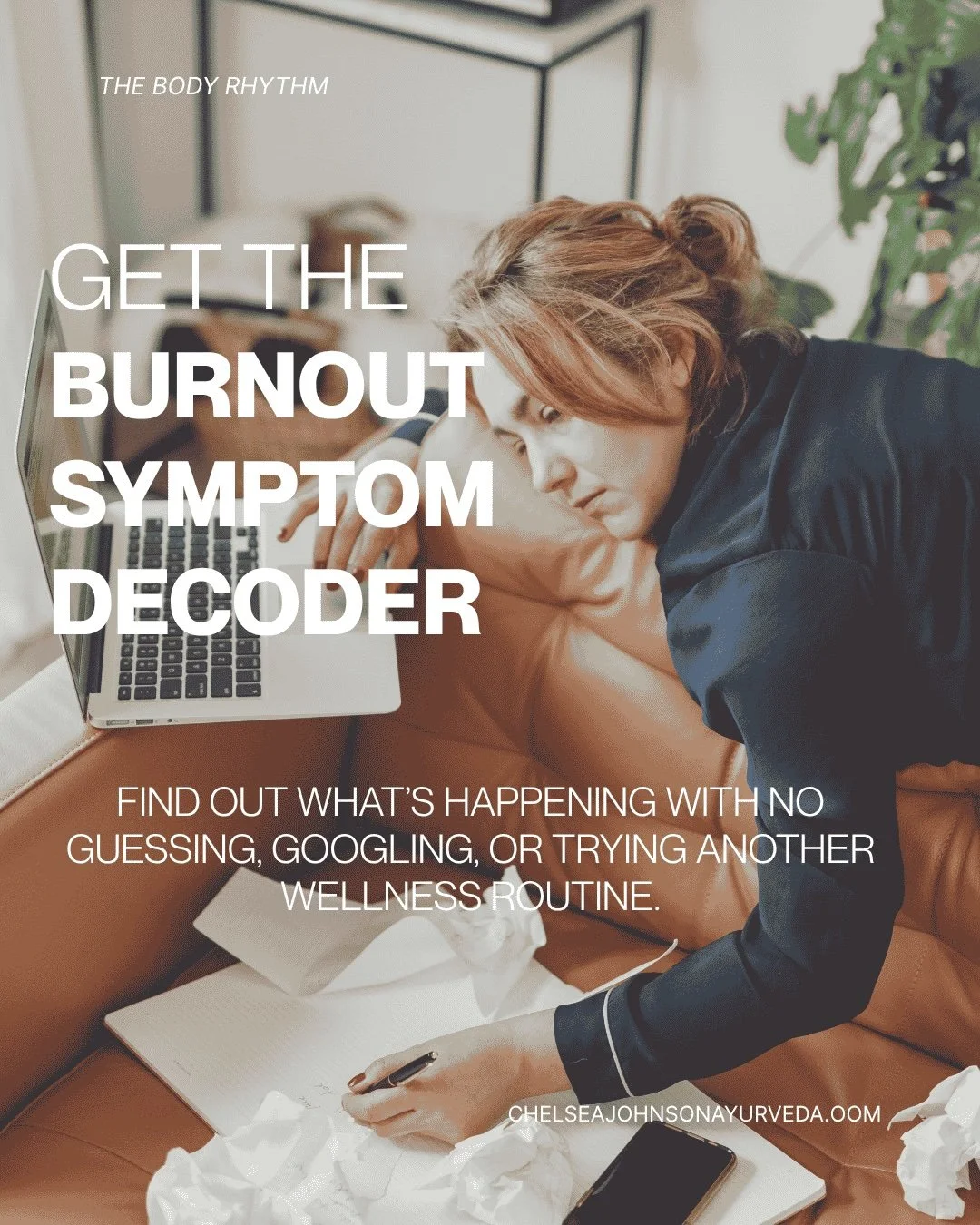
You cleared the weekend. You cancelled the optional commitments, told yourself this Saturday was yours, and woke up with nowhere to be. And instead of feeling relief, you felt worse. Restless. Vaguely anxious. Unable to settle. So you clean, run errands, go to the workout class, and you still feel exhausted.
If that sounds familiar, you're not alone.
The inability to relax even when you make time is one of the most common symptoms of a chronically stressed nervous system. It's physiology. Once you understand the pattern behind it the path to rest and restoration becomes clearer.
Your Nervous System Has No Off Switch When It's Been Running on High for Too Long
When a stressor appears in your life, like your morning commute or a difficult conversation with a co-worker, you nervous system ramps up to keep you safe. But, when the traffic or conversation passes your nervous system doesn’t automatically downshift when the stressor disappears. And if your nervous system has been operating in chronic stress mode for months or years, it wears on your body and brain. Your body stops treating rest as your default mode. Instead, it begins to associate rest as the exception to chronic stress mode.
And on a quiet Saturday evening with your S.O. or on a dream vacation, your body isn’t able to relax. The mind continues to chatter, the body continues in “go” mode. Your body recognizes rest as a gap in stimulation it doesn’t know how to fill.
This is why relaxation can feel more uncomfortable than busyness. Busyness is familiar. The body knows exactly what to do with it. Rest is unfamiliar. And the nervous system treats unfamiliar as a potential threat. Your body stays in continued vigilance.
What "Rest Feels Wrong" Is Actually Telling You
The feeling that something is wrong when you slow down — the restlessness, the low-grade anxiety, the compulsion to check your phone or find something to do is the nervous system doing its job. It's scanning for threat the way it always does.
Psychiatrist and neuroscientist Dr. Stephen Porges, developed Polyvagal Theory to explain how the autonomic nervous system — the part of the nervous system that governs involuntary functions like heart rate, breathing, and digestion operates.
When the nervous system has spent extended time in chronic stress, the shift into rest mode - pause, safety, support - requires more than a cleared calendar. Rest mode requires biological cues that your environment is actually safe. It’s slowing the breath. A predictable rhythm. Physical warmth. The feeling of being held rather than holding.
The absence of a stressor is not the same as the felt sense of safety. This all happens on the unconscious level and your nervous system knows the difference.
Why Vacation Doesn't Fix The Relaxation Problem and What That's Telling You
Over the years I've heard some variation of the same story. A woman takes a week off, arrives somewhere beautiful, and spends the first three days feeling more anxious than she did at work. Her digestion flares. Her sleep is worse than usual. She can't stop making lists in her head. By the time she starts to soften into the trip, it's almost time to come home.
This isn't a failure. It's physiology.
A nervous system that has been running on stress, cortisol and forward momentum can’t immediately receive stillness. The first few days of a vacation are often the body's decompression. It’s adapting to an environment without disruption and that can feel uncomfortable for the nervous system that’s been in survival mode. You’re not able to stop fully. You’re not able to pause and rest fully. And so you continue in the mode that your body is comfortable with.
What Ayurveda Calls The Inability To Relax Pattern
In Ayurveda, a nervous system that can’t downshift into rest-and-digest mode is a sign that the nervous system is imbalanced. The imbalance becomes elevated by the lifestyle most professional women have; irregular schedules, skipped meals, overstimulation, working on computers, multitasking, and chronic output without adequate restoration. This chaotic lifestyle creates a restless mind and body, an underlying anxiety, and a feeling of being ungrounded.
What Ayurveda understood centuries before polyvagal theory gave us the neurological language for it is that the nervous system needs safety, support, and rhythm to regulate. It needs consistent routine. This looks like the same wake-up times and bedtimes every day, nourishing food, moments of stillness, and an evening wind down routine. When the nervous system is able to predict what comes next, it can finally stop scanning for threats, and operate more effectively.
This is why "just rest more" doesn't work. Rest without rhythm is like telling a hyperventilating person to just calm down.
How to Teach Your Nervous System That It's Safe to Rest
The nervous system learns safety through consistent cues over time that the environment is safe, predictable, and supportive.
Start with the exhale, not the activity. An exhale that is longer than the inhale stimulates the vagus nerve and begins to shift the nervous system into parasympathetic response. Notice how many counts your inhale is and then extend your exhale by one additional count. For example, if you can inhale for 1 count, exhale for 2 counts. This also helps with nighttime heart palpitations. This is the biological signal your nervous system is waiting for.
Build micro-transitions into your day. The nervous system cannot shift from full activation to full rest in one step. It needs small, consistent moments of pause throughout your day. Eating without being in front of a screen. A 2 minute pause before your next meeting. Sitting outside with the sun on your skin for 5 minutes at the end of your workday. These small signals allow the nervous system to downshift slowly throughout the day.
Make rest predictable before you make it long. Rest doesn’t have to be 45 minutes. Start at 10 minutes at the same time every day. This begins to signal predictability and safety to the nervous system. Consistency is the currency of nervous system safety. The body relaxes and softens into what it anticipates.
Move in nature, even briefly. A recent study found that being in nature helps regulate sleep and relaxation. Ten minutes of walking outside, watching a beautiful sunset, gives your nervous system the cues it needs to shift into rest mode.
Reduce the stimulation before you rest. Every notification, alert, headline, and scroll is an external stimulation that keeps your body in activation. Try turning off screens 15-30 minutes before you go to bed and makes falling asleep easier.
FAQs: Why You Can't Relax Even With Free Time
Q: Why do I feel more anxious on weekends than during the workweek? The workweek provides a predictable structure that keeps the nervous system oriented. When that structure disappears on the weekend, the system loses its anchors and can experience the unstructured time as disorienting rather than restful. This is especially common in women whose nervous systems have been operating in sympathetic response for extended periods.
Q: Why does slowing down make me feel worse before it feels better? Decompression is the nervous system discharging what it’s been holding under sustained activation. It can feel uncomfortable and you might notice more restlessness or emotional sensitivity at first. I often see this when a woman under chronic stress first experiences yoga nidra or savasana in a yoga class. The body has a hard time transitioning to rest but decompression is needed. It’s the beginning of the process.
Q: Can you train your nervous system to relax more easily? Yes.The nervous system learns safety through consistent cues of safety. Long exhales, predictable schedules, small pauses between tasks, and reduced external stimulation. Weighted blankets and eye pillows are also tools that provide a felt sense of safety to the body when you’re resting. Most women notice meaningful improvement in their capacity to relax within three to six weeks of consistent practice.
Q: Is not being able to relax a sign of burnout? Yes, it definitely can be. The inability to downshift indicates that the body’s stress-response system is dysregulated. The nervous system has been in chronic stress or burnout for so long that rest and calm no longer feel safe. Burnout and living in survival mode for years starts with addressing the imbalances in the nervous system.
Your Nervous System Isn’t Broken
The free time that feels harder than your workweek isn't a sign that you're too wound up to ever unwind. It's a sign that your nervous system has been in survival mode too long. Your nervous system needs repeated cues of safety, stillness, and softening. Your nervous system can recalibrate. If you want to give your nervous system a direct, guided experience of what genuine rest actually feels like, the Deep Rest Yoga Nidra practice is exactly that.
Download the Yoga Nidra practice here — use it tonight
It was recorded specifically for the kind of tired that free time doesn't fix. Lie down. Press play. Let your nervous system remember what safety and rest feels like.
Last updated: September 2026