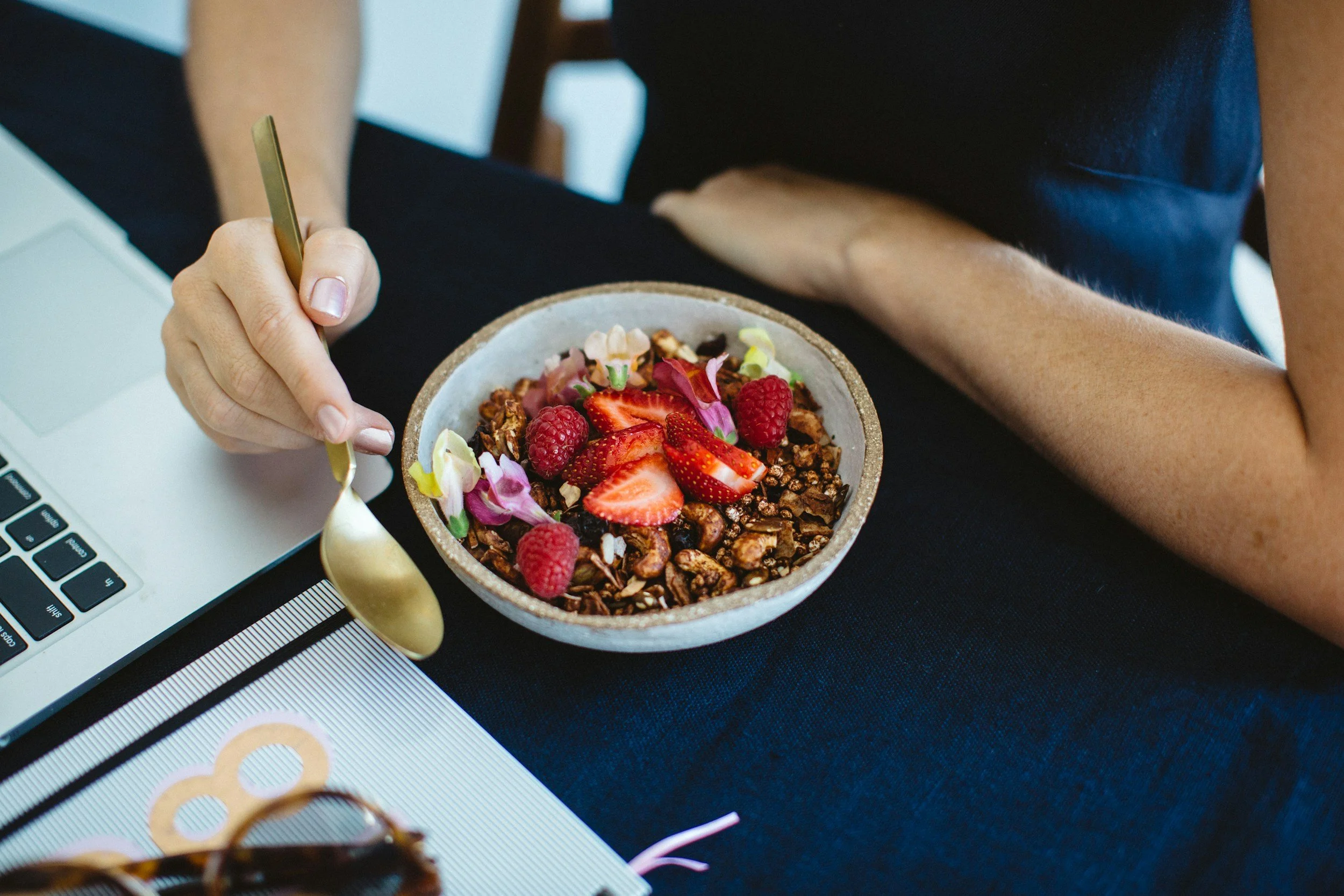
Yes, eating at your desk can make digestion harder. Your body digests best when it feels calm, and answering emails while you eat keeps you in stress mode, which slows digestion and can leave you bloated by mid-afternoon
It's 1:45pm. You open the container you packed this morning, balance it next to your keyboard, and eat half of it between two emails and a Slack message. By 3pm you're bloated. By 8:30pm you're finally eating dinner, standing at the counter, too tired to taste it.
If that's most of your weekdays, you've probably searched for how to support digestion when stressed and found advice that assumes you have an hour and a calm kitchen.
Your body can't digest well while it's rushing or running on empty, and no supplement changes that. Digestion is a rest-state function. What you can do is lower the cost. A 2013 meta-analysis in the American Journal of Clinical Nutrition found that distracted eating increases how much people eat later, so small shifts in attention and timing matter more than most women expect.
Below are the five small things I teach burned-out clients to do when desk lunches, skipped meals, and late dinners aren't going away anytime soon.
Can you digest well when you eat at your desk?
Not fully, no. Digestion depends on your parasympathetic nervous system, the "rest and digest" branch of the nervous system that switches on when your body feels safe and supported. Answering emails keeps you in sympathetic activation (fight-or-flight), which moves blood and energy away from your gut and digestion.
Digestion begins before food reaches the stomach. Seeing and smelling a meal starts the flow of saliva and gastric juices. When we are glued to screens while we eat the beginning phase of digestion is skipped.
Marc David, founder of the Institute for the Psychology of Eating, builds much of The Slow Down Diet (2005) around this idea. He estimates that 30 to 40 percent of your total digestive response to a meal comes from that beginning phase. A meal you barely register is a meal you only partly digest.
I can often read the state of a woman's nervous system on her plate. When a woman is depleted and scattered, what Ayurveda calls a vata pattern, she eats on the run, in front of her computer, standing at the counter or grabbing a bar or a yogurt between meetings. Those habits are a picture of a body that hasn't had permission to stop in a long time.
Why are skipping lunch and eating late so hard on a burned out woman’s body?
Skipping lunch and eating late both push your biggest meal into the hours your body is least prepared to digest it. For a nervous system already running on stress hormones, that timing mismatch shows up as bloating, afternoon crashes, cravings, and restless sleep.
In Ayurveda, agni (your digestive fire is the capacity to break down food and absorb what nourishes you) is strongest around midday. Skip lunch, and you miss the digestive window your body is built for. Eating your biggest meal at midday lessens digestive upset because that is naturally when digestive power peaks.
Late eating adds another layer. In a 2022, there was a study that concluded that participants who ate the same meals four hours later burned fewer calories while awake. They also felt hungrier and had lower leptin, which is the hormone that signals fullness. The body and digestive system runs on a daily internal clock pattern. And eating at random times disrupts your body’s internal clock.
I lived this during the season I spent helping my father through cancer treatment. Meals became whatever I could grab between emergency rooms and doctors' calls, and dinner happened whenever the day finally let go. My digestion was reflecting a life with no room to receive.
5 small ways to support digestion when stressed and still working
Desk lunches will stay imperfect, but you can still give your gut a few signals of safety. Each shift below takes under five minutes. Choose one for the next two weeks before adding another, because adding all five at once turns digestion into another project to manage.
1. Take three slow breaths before your first bite
Before you pick up your fork, put your hands in your lap and take three breaths with a longer exhale than inhale. A long exhale is one of the fastest ways to cue your parasympathetic nervous system. It's small enough to do with your inbox still open. Inhale the scent of the meal or say a small prayer of thanks for the food.
2. Give your first five bites your full attention
Turn your chair away from the screen, or simply look at your food, for the first five bites. Notice the taste and temperature, and chew more slowly than feels natural. This brings your digestive system online that you skip when you answer emails while you eat. Five bites is realistic on your worst day. Pleasure is part of how your body takes in nourishment.
3. Swap the iced drink for something warm
Ayurveda teaches that cold drinks dampen agni or digestive power, while warm and room temperature liquids support it. Keep a mug of warm water or your favorite tea at your desk and take small sips with your meal. Gulping large amounts of any liquid while eating dampens your gut’s ability to digest.
4. If lunch gets skipped, eat a bridge snack by 2pm
Some days lunch disappears. On those days, eat something small by early afternoon so you don't arrive at dinner ravenous. A handful of nuts or a thermos of leftover soup keeps your blood sugar steadier and prevents the 8pm overeating that follows a skipped meal.
5. Keep late dinners light and warm, then take a walk
When dinner is late, choose something warm and easy to digest, like soup or rice with cooked vegetables, and keep the portion size smaller than lunch. Then take a 10-15 minute walk. Ayurveda calls this shatapavali, the traditional "hundred steps" after a meal.
The questions women ask me most about digestion on busy days
The most common question is whether eating at your desk is always bad. Some days it's the only option. Aim to make it the exception, and bring even a few seconds of presence to the meals that do happen at your keyboard.
Women also ask how late is too late for dinner. When you can, aim to finish eating two to three hours before bed so your body can shift from digesting into relaxation and sleep mode. When you can't, eat a lighter, warmer meal which is easier to digest. LAte nights is not a time for big dinners that take a lot of digestive power.
Many women ask whether slowing down can affect weight. Yes. When we say in chronic stress mode the body doesn’t feel a sense of safety and can hold onto weight. When we slow down, it signals to the body that it is safe to eat and receive nourishment. It also signals to the body a predictable rhythm that can help with creating that sense of safety. The body then doesn’t feel like it has to hold onto everything because it feels it’s always in danger.
Another question I hear often is, "What if I'm not even hungry at lunch?" Low midday appetite is common when you're running on stress, because fight-or-flight suppresses hunger signals. Eat something small anyway, and notice whether appetite returns as your days slow down. Your daily internal clock may be a bit off leading to not feeling hungry.
What your gut needs on busy days
You can't fully digest well at a desk or at 9pm on an empty tank. Pretending otherwise just adds guilt to your already full plate. Your gut responds to small, repeated signals that you're safe enough to receive.
Three breaths and five focused bites, a warm mug, a bridge snack, and a short walk after a late dinner keep your digestion from paying the full price of burnout.
If you're wondering how much of your bloating and afternoon crashes come from stress, download the Hidden Signs of Burnout: A Body checklist. It’s a great first place to see how stress is showing up in your body and what it may be asking for. If your ready, I also offer a free Embodied Wisdom Session to look at what exactly is happening in your life and body and real solutions to help you today.
Last updated: September 2026