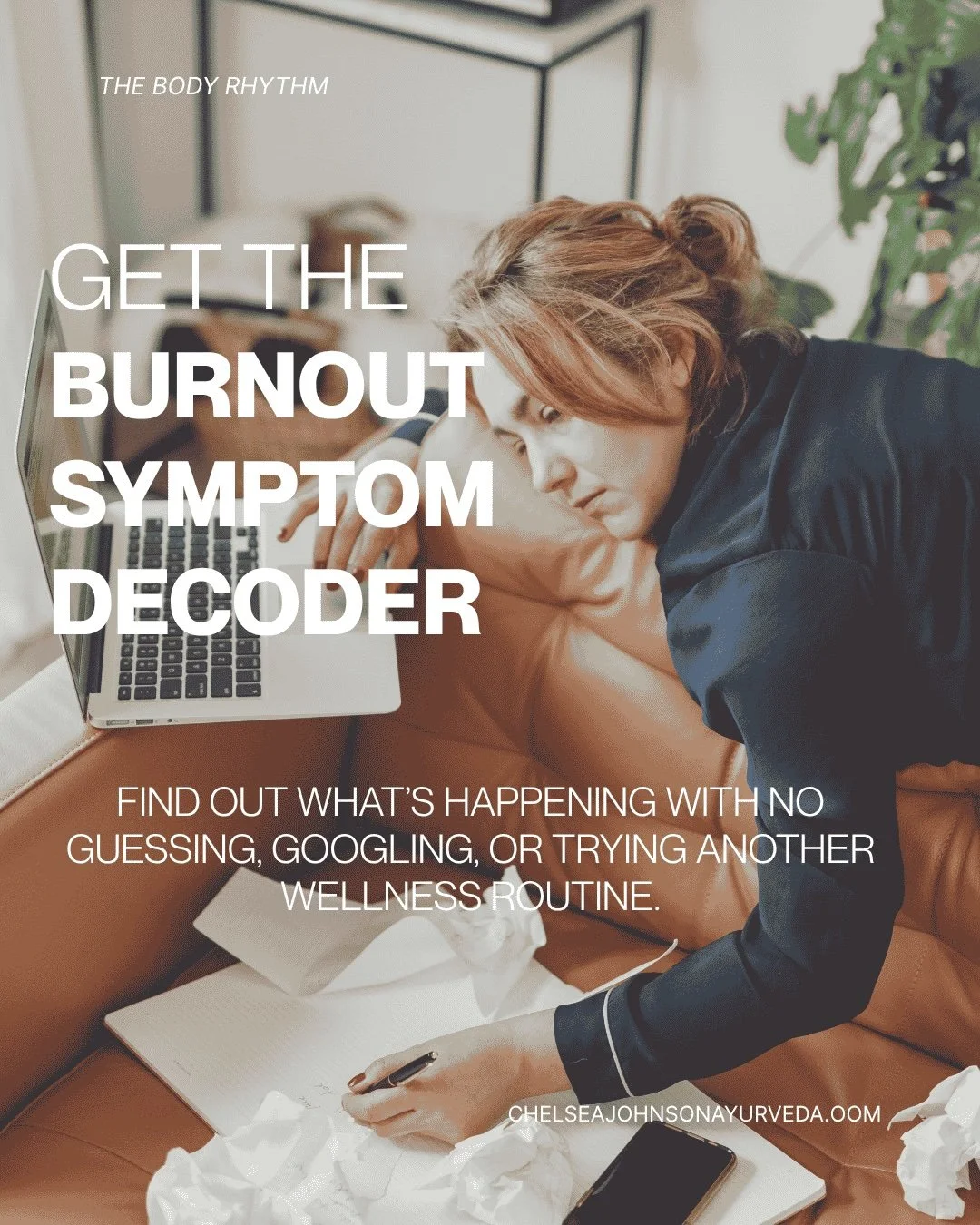
Tired vs. Depleted: Why Rest Isn't Fixing It

You went to bed early. You slept eight hours. You woke up feeling exactly the same. Exhausted. Too tired to start the day.
It’s not a sleep problem. It’s not a caffeine problem. It’s not even a discipline problem or a willpower problem.
It’s depletion. And it is entirely different from being tired.
Tired and depleted are often used interchangeably, but they respond to completely different things. Tired is a signal the body sends when it needs rest. It’s part of the body’s physiological response. Everyone needs to sleep.
Depletion is what happens when the body has been running beyond its reserves for so long that rest and relaxation alone can no longer restore it. According to a 2025 analysis in Time magazine, the distinction impacts how people approach recovery. Trying to sleep your way out of depletion is like trying to fill a container with multiple cracks.
What Is the Difference Between Tired and Depleted?
Tired recovers with rest, relaxation, and sleep. Depletion does not. Knowing the difference between the two changes everything about the approach to healing.
Normal tiredness is the body's signal at the end of a full day: muscles have been used, the brain has processed, cortisol has cycled down, and sleep will restore what was spent. You wake the next morning feeling refreshed and like yourself. The system reset. And you move forward with the rest of your day.
Depletion operates differently. It is the result of a prolonged mismatch between output and replenishment — weeks, months, or years of spending more than the body is taking in. The nervous system has been in chronic sympathetic activation — the body's stress response — for so long that it has lost access to its own recovery state. Sleep happens but repair doesn't. You wake up already behind.
The clearest way to distinguish between depletion versus tiredness is whether rest is actually restoring you. If you are consistently waking up unrefreshed, if a full weekend off leaves you only marginally better, if you no longer bounce back the way you used to that is depletion. The body is running out of a resource that sleep alone cannot replenish.
Why Rest Doesn’t Fix Exhaustion
Sleep can’t restore what the nervous system never had a chance to repair and for many women repair has been closed for years.
When the nervous system is regulated, during sleep cortisol drops, the parasympathetic branch of the autonomic nervous system — the rest-and-repair system — becomes dominant, growth and repair happens and the brain’s toxic clean-up system (the glymphatic system) is activated.
But when the body is in chronic stress activation, the nervous system does not fully downshift at night. Cortisol, which follows a circadian rhythm, your 24-hour internal biological clock governed by the hypothalamic-pituitary-adrenal axis, remains elevated at night. The body stays in a low-grade state of alert. Research from the Nobel Prize-winning circadian biology work established that the body's internal clock regulates not just sleep timing but the hormonal cascades that make restorative sleep biologically possible. When the internal clock is disrupted by chronic stress the quality of sleep degrades even when the hours look adequate.
This is why so many depleted women describe sleeping but not resting. The hours are there. But the repair isn't.
What Depletion Actually Looks Like in the Body
Depletion shows up as a specific cluster of symptoms that differ from ordinary tiredness. Learning to recognize the pattern is the first step toward addressing the root.
I spent a period of my own life surviving almost entirely on stimulation. I was the woman reaching for the fourth or fifth cup of coffee at three in the afternoon, trying to force myself through the rest of the day. Sometimes I would get home without enough energy to shower. I would simply collapse into bed. At the time, I thought the issue was energy. I had to keep going. I didn’t have time for rest. Looking back, I understand I was depleted. My body was running out reserves it had never been allowed to rebuild after years.
The pattern I see most often in the women I work with looks something like this: mornings feel heavy despite adequate sleep; energy is flat rather than fluctuating; there is a kind of emotional flatness or disconnection that sits alongside the physical fatigue; and the activities that used to restore them — a walk, a good meal, a weekend away — are no longer doing their job. One woman I worked with described it like she was pushing just enough to stay functional, trying to preserve some sense of normalcy, but every small outing ended in a crash afterward.
That is depletion. A body that has been holding more than it has been able to process for too long.
Comparison: Tired vs. Depleted
| Tired | Depleted | |
|---|---|---|
| Cause | Normal daily output | Prolonged mismatch of output and restoration |
| Responds to | Sleep and rest | Rhythm, nourishment, nervous system repair |
| Morning feeling | Refreshed after sleep | Unrefreshed, heavy, already behind |
| Emotional tone | Neutral, manageable | Flat, disconnected, joy feels inaccessible |
| Bounce-back | Intact | Reduced or absent |
| Ayurvedic lens | Temporary vata increase | Ojas depletion — deep vital reserve |
What Ayurveda Calls Depletion
Ayurveda, the 5,000-year-old holistic healing system from India, describes Ojas, pronounced oh-jas — which is the vital essence or deep love for life. Ojas is necessary for anti-aging and to fight disease. Ojas is our source of strength and power and natural immunity. Ojas becomes depleted when we are under chronic stress.
When ojas is abundant there is resilience, love, freedom, and awareness. The body bounces back from life experience and disease. The immune system is strong. Sleep is deep and restoring. There is a sense of being rooted in yourself. Of peace and love. It opens our connection to God which spreads bliss throughout the entire body.
When ojas is depleted through chronic overwork, emotional suppression, poor sleep, irregular eating, or prolonged stress, symptoms look exactly like what modern medicine is beginning to call burnout. Fatigue that rest doesn't fix, digestive instability, emotional volatility or flatness, low immunity, and a disconnection from joy. Signs of depleted ojas are heart palpitations, breathlessness, fear, and extreme tiredness that is not cured by rest.
Ayurveda helps us understand the root of what is causing burnout symptoms and therefore tells us how to rebuild. Ayurveda has a clear framework for what rebuilds ojas. Nourishment, rhythm, warmth, rest, and reducing chronic stress, and external stimuli, and processed foods which depletes the nervous system over time.
The recovery approach for depletion is different from the recovery approach for tired. You cannot think or discipline your way out of ojas depletion any more than you can think your way out of a nutrient deficiency. The body needs specific inputs and rest alone is only one of them.
Why Conventional Recovery Advice Misses Depletion Entirely
Most advice about exhaustion assumes the problem is tiredness and applies tiredness solutions to a depletion problem. This is why so many women feel like they've tried everything and nothing works.
The standard recommendations to get more sleep, take a vacation, try meditation, exercise more, eat better can work for tiredness. They replenish what normal daily output spends. But depletion is a different problem. The reserves themselves are depleted. Adding better sleep hygiene to a depleted system is like reorganizing a house that doesn't have running water.
Also, most burnout advice assumes that a person can stop, step back, and rest fully. That model does not fit the women I work with. They can’t quit their jobs. They can’t hand off the caregiving. They can’t disappear for a month. And so the advice that requires those conditions becomes one more thing that doesn't apply to their actual life.
Depletion recovery requires working with the body's rhythms from inside an ongoing life. That means smaller, more consistent inputs. A daily routine that works. Nourishment rather than restriction. Warmth and gentleness rather than optimization.
One of the most counterintuitive shifts I see in depleted women is that doing less moves the needle in a way that other things never did. Because the body finally has enough space to begin restoring what it lost.
The Questions Women Ask Me Most About Tired vs. Depleted
A question that comes up often is whether supplements can fix depletion. Adaptogens like ashwagandha, shatavari, and brahmi, which are used in Ayurvedic medicine, can support the adrenal and nervous system recovery process. However, they can’t fix a broken bodily system on their own. If you're still running the same program in your daily life, adaptogens can’t refill your container in a meaningful way. Supplements taken inside a depleting lifestyle are like bailing water from a boat that is still taking on water. The lifestyle conditions have to shift first. Then supportive herbs become useful.
Recovering from burnout and ojas depletion isn’t a quick fix. It begins by noticing the small spaces that you give yourself for rest. It's waking up one morning and not immediately feeling behind. It's noticing that something small - a walk, a conversation, a meal - felt nourishing rather than draining. The bounce-back begins to return in small increments. It’s learning to trust yourself and your body again.
FAQs: Tired vs. Depleted
What is the difference between being tired and being depleted? Tired is a normal signal that the body needs rest — it resolves with sleep. Depletion is a deeper condition where the body's restorative capacity itself has been exhausted through prolonged stress, chronic overwork, or emotional overload. Depleted people sleep but do not feel restored. The recovery approach for each is completely different.
Can you recover from depletion without quitting your job? Yes — but it requires a different strategy than most burnout advice offers. Recovery from depletion happens inside an ongoing life through rhythm, consistent nourishment, nervous system support, and reducing inputs rather than adding more wellness practices. Small daily changes sustained over weeks matter more than periodic rest.
Why do I wake up tired even after a full night of sleep? Waking unrefreshed after adequate sleep is a hallmark sign of depletion rather than ordinary tiredness. When the nervous system remains in chronic stress activation, the body does not fully enter its restorative state during sleep. The hours of sleep are present, but the biological repair process is incomplete.
What does Ayurveda say about deep exhaustion? Ayurveda describes deep exhaustion through the concept of ojas — the body's vital essence and immunity which is built slowly through nourishment and rest. Rebuilding ojas requires warmth, rhythm, nourishing foods, reduced stimulation, and time. It is not a quick fix.
How long does it take to recover from depletion? Recovery timelines vary depending on how long the depletion has been building. Each body is different. It depends on how long depletion has been present. It can take 3, 6, 9 or 12 months of consistent nervous system support. The body heals in the direction you move consistently towards.
The Body Was Never the Problem
Depletion isn’t a flaw. It is not what happens to people who can't handle stress. It usually happens to women who can handle stress. But eventually the stress becomes too much. It is what happens to capable, high-output people who have been spending more than they've been replenishing for long enough that the reserves ran out.
The distinction between tired and depleted matters because it changes what you do next. Sleep is not the answer when the system that makes sleep restorative has been compromised. Rest is not enough when what's depleted goes deeper than rest can reach.
Recovery from depletion is real and possible. It is slower than most people want and less dramatic than most wellness content promises. But it happens — through rhythm, through nourishment, through learning to work with your body's actual signals instead of overriding them.
When your nervous system has been on alert for too long, when your body has been stuck in survival mode you can’t remember what it felt like to relax, slowing down can feel uncomfortable. This free Yoga Nidra practice is a gentle way to practice rest with a sense of safety and support. It’s a way to start restoring your body.
If you're sitting with the recognition that this is depletion and not just tiredness, and you want to understand what recovery could look like in the context of your actual life — not a life on pause — that's exactly what we explore inside Body Alchemy.
Last updated: August 17, 2026