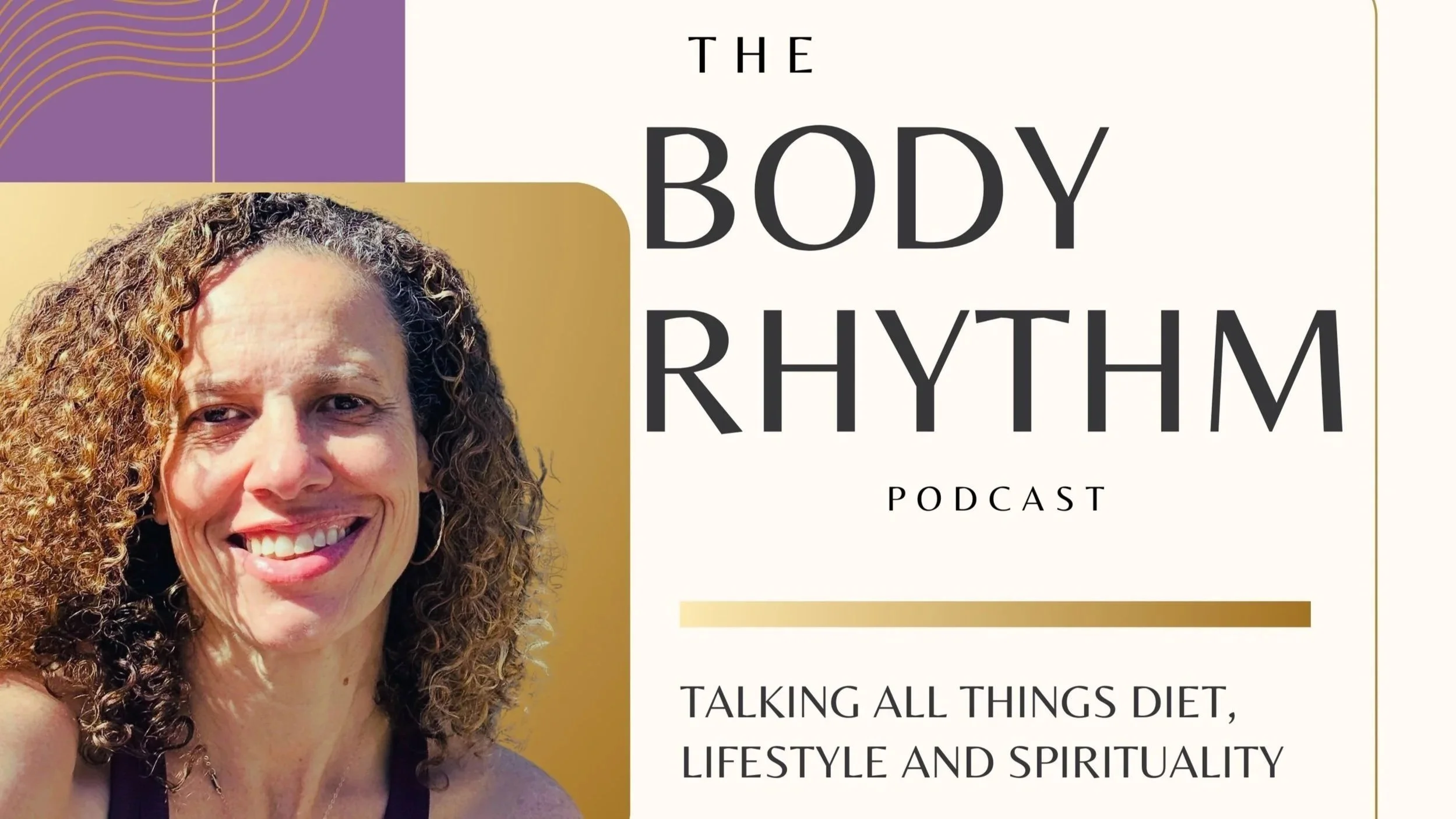
The Body Rhythm Podcast
with Chelsea Johnson
The Body Rhythm is a podcast for women who are doing everything right and still feel like something's off. Each episode blends Ayurvedic wisdom with nervous system science to help you understand why your body feels exhausted, wired, or stuck — and what to actually do about it.
Whether you're dealing with burnout, digestive issues, hormonal imbalance, or just a persistent feeling that you've lost your rhythm, you're in the right place.
New episodes Thursday.
Not sure where to start? Take the free gut health quiz and find your pattern →
Start Here
Most Recent Episodes
Always Inflamed? Why Your Body Feels This Way — And What's Actually Behind It | Episode 22
Bloated, foggy, and reactive even when you're eating clean? Inflammation might not be the problem — it might be the message. And there's an important difference.
If you've been cutting foods, adding supplements, and doing everything right — and your body still feels off — you are not doing anything wrong. In this episode of The Body Rhythm podcast, we explore why inflammation isn't the enemy your body is fighting, but a signal it's been sending for a long time. Understanding the difference changes everything about how you support yourself.
What you'll take away from this episode:
Inflammation is a symptom, not the root cause. Your body isn't breaking down — it's adapting to what it's been carrying. Bloating, brain fog, joint stiffness, and skin flare-ups are the body's way of communicating that something deeper needs attention.
Chronic stress is one of the biggest drivers. When your nervous system stays in a low-level stress response — even the quiet, invisible kind — digestion slows, repair decreases, and inflammation increases. Not because something is wrong with you, but because your body is prioritizing survival over restoration.
Ayurveda starts with digestion, not inflammation. When your digestive fire weakens through stress, irregular rhythms, and depletion, what doesn't get fully processed begins to accumulate. In Ayurveda this is called ama — and over time, that accumulation creates the conditions for inflammation. Inflammation is where we finally notice it. The root started much earlier.
Restriction and elimination address the symptom, not the system. Cutting gluten, dairy, or following anti-inflammatory protocols can bring relief — but if the approach doesn't ask why the body became reactive in the first place, the pattern keeps returning.
Your body responds to support, not more pressure. More rules layered on top of an already depleted system rarely create lasting change. What your body is actually asking for is rhythm, safety, and the conditions that allow it to finally process and clear what it no longer needs.
The question isn't how do I get rid of inflammation? It's what has my body been needing that it hasn't been receiving? That shift alone changes everything about where you look — and what you find.
Read this week's full post → The Body Rhythm Blog
Every week in The Body Rhythm newsletter I share one practice, one reframe, and one small thing your nervous system actually needs. If this resonated, you'll feel at home there.
Join the newsletter → Here
Not sure where your stress and gut patterns are coming from?
Every episode on this podcast circles back to one thing — the connection between how your body handles stress and how it feels day to day. If you've been listening and thinking this sounds like me, the next step is finding your specific pattern.
The FREE Gut Health quiz takes 2 minutes and tells you exactly why your gut does what it does — based on your stress response, not just your food choices.
Begin Here: A Gentle Reset for Your Nervous System
If your body feels tired, wired, or just… off—
this is a place to begin.
A 12-minute guided Yoga Nidra to help your body unwind, settle, and come back into rhythm.
You don’t need to do more.
You don’t need to figure anything out.
When your nervous system is overwhelmed, even the things that are supposed to help—like eating well or doing yoga—can start to feel like too much.
This short, guided practice helps your body begin to settle, so you can feel more at ease, more clear, and more connected again.