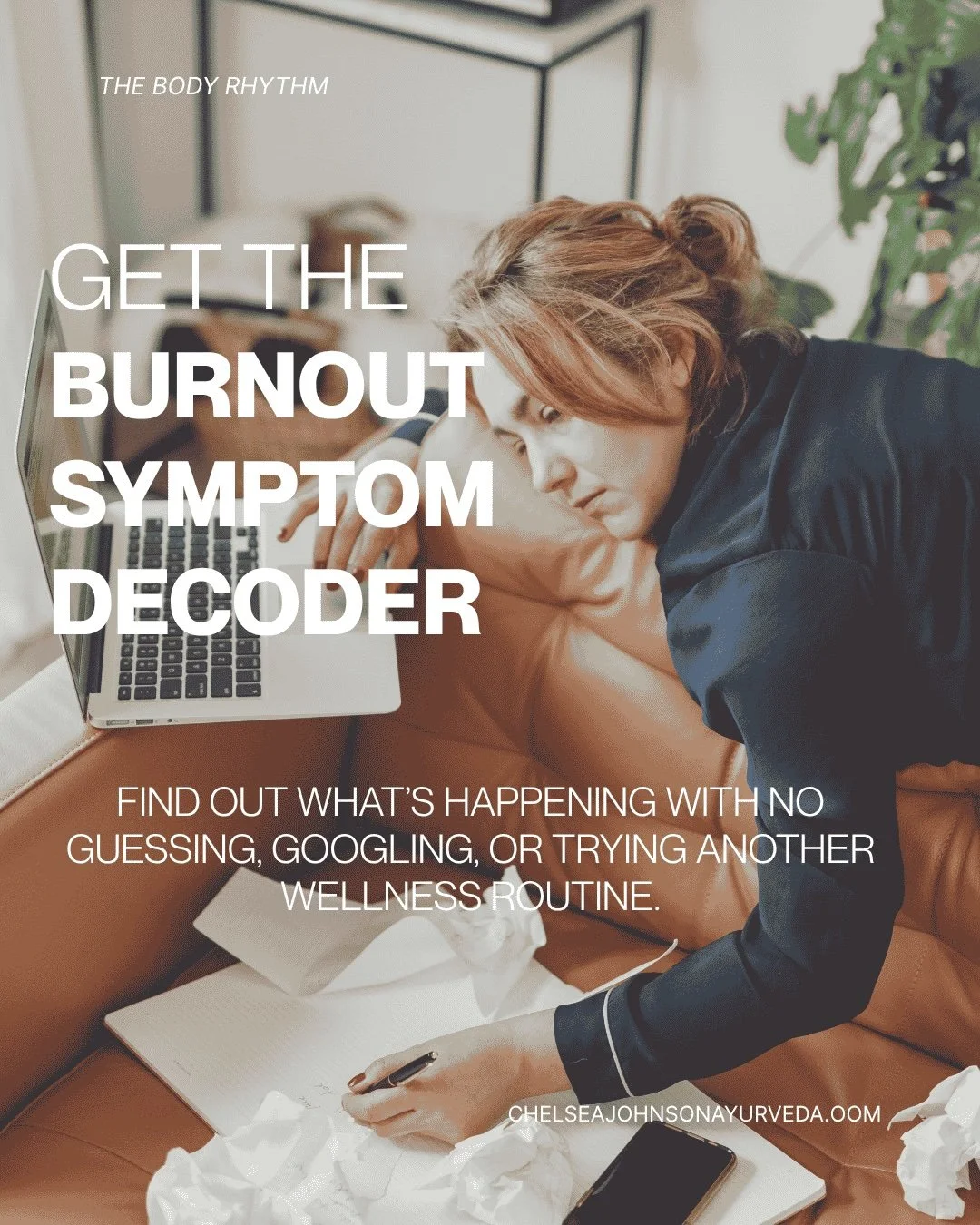
Why Burnout Happens to High-Achieving Women
In the 1830s, Harriet Beecher Stowe was raising seven children, managing a household in constant financial strain, and writing in stolen fragments at the kitchen table — not because she had the space to create, but because the family needed the income. By 35, her body gave out. At the time it was called nervous exhaustion. Today, we might call them the signs of burnout.
Harriet wasn't just tired. Her letters and family accounts describe someone deeply depleted — physically and mentally overwhelmed, largely bedridden for months. She eventually went to a water-cure retreat, and what actually helped wasn't the water. It was being removed, for the first time in years, from the relentless responsibility of her life.
Long before that kind of collapse, the body is usually whispering. Tension in the shoulders and jaw. Shallow breathing. Bloating or heartburn that quietly becomes "just how it is." An exhaustion that sits underneath everything, never fully lifting even after rest. Irritability aimed at the people you love most. A flatness beneath the surface, because functioning has to be the priority and everything else gets pushed down. It means you've been strong for too long in a nervous system that was never designed to stay in survival mode indefinitely. In Ayurveda, this is a weakened Agni. When there's too much coming in with no time for restoration, the digestive fire runs low and everything gets harder to metabolize.
When we live in chronic output and chronic suppression, our life force, or Prana gets restricted. The body tightens, breathing shortens, attention narrows. We become rigid instead of pliant. Shallow breathing is an early-warning sign. It's often the clearest signal that Prana has contracted and the nervous system is in survival mode. Prana needs movement, space, and relationship to move. A full breath, time outside, rest, space, and stillness. It’s not about adding another thing to your to-do list. It’s about giving your mind and body more space and resilience.
Try this today: Take three slow, full breaths right now, letting the exhale extend a bit longer than the inhale. Then ask your body one honest question: what has it been quietly telling you long before it needs to shout? You’re just beginning to notice what your body has been telling you.
Your body doesn't need to fully break down before you're allowed to listen.
If the pattern of doing everything and still feeling depleted sounds familiar, here's why your wellness routine might not be working.