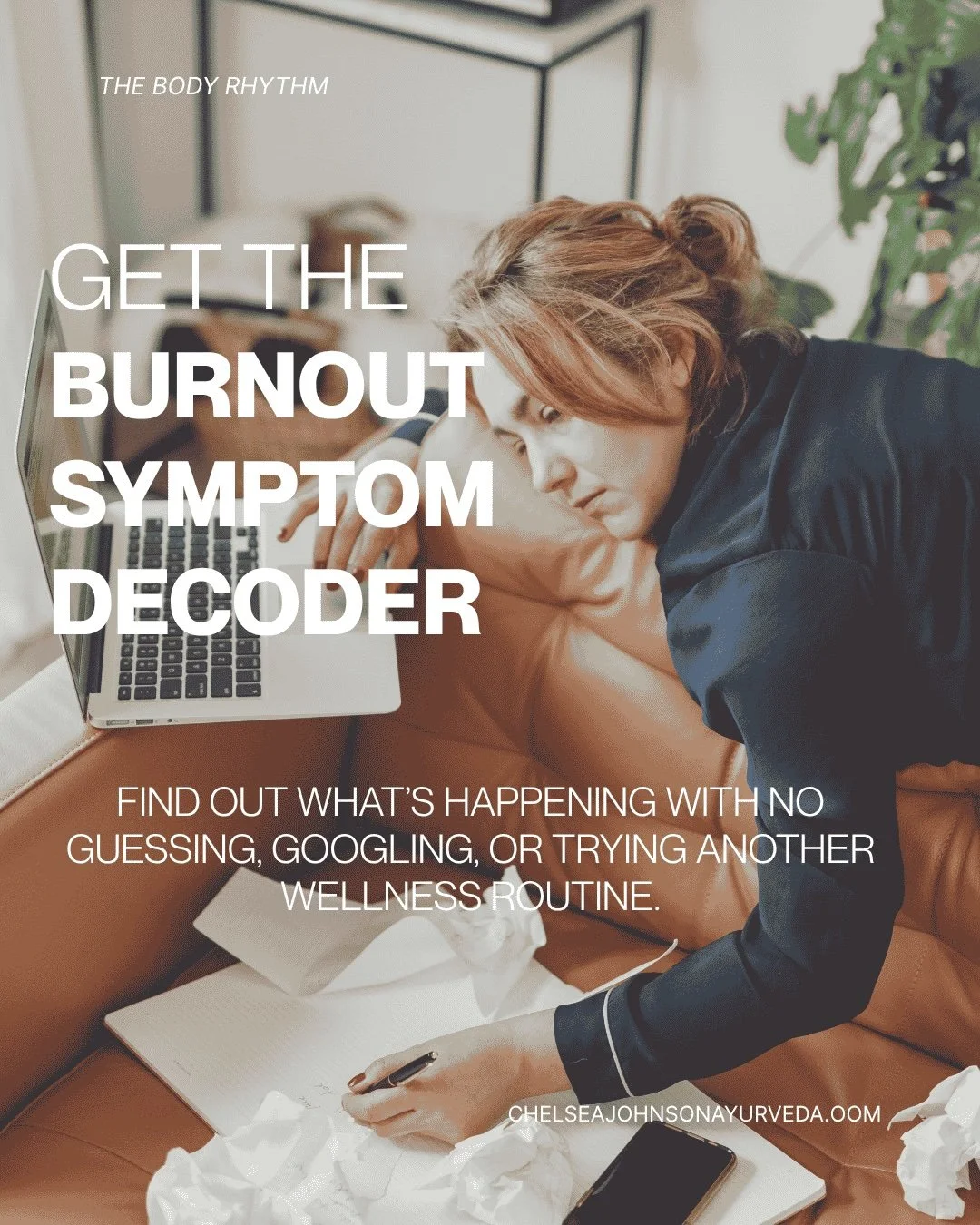
Why You Feel Constantly Stressed (But Don't Think You're Anxious)
High-functioning anxiety rarely looks like anxiety. It looks like getting everything done. If you've been asking why am I always tired, why can't I sleep at night, or why your digestion feels off — and everyone around you keeps saying you just "have a lot going on" — this episode is about the anxiety hiding underneath that competence.
We tend to picture anxiety as panic or falling apart. But for a lot of women, it shows up as productivity on overdrive — over-preparing, caretaking, perfectionism, staying endlessly busy. In Ayurveda this is an excess of pitta, the fiery, driving quality in the body. It doesn't get flagged as a problem. It gets called being strong, capable, together. There was a stretch of running almost entirely on coffee and caregiving — four or five cups by the afternoon just to keep functioning, nothing left by evening to cook dinner or even shower. From the outside, everything looked fine. Nobody called that anxiety. They called it "a lot going on."
That's the trap. Functioning is not the same thing as feeling safe in your body. Chronic stress doesn't wait for permission to be named before it starts showing up — it speaks through the body long before anyone calls it anxiety or burnout. Common signs of burnout hide in plain sight: fatigue that doesn't lift with sleep, bloating, gas, or an upset stomach after meals, insomnia or nights you can't sleep no matter how tired you are, tension that never fully releases, an emotional flatness where joy feels harder to find. In Ayurvedic terms, if pitta runs hot for long enough, the body eventually swings to its opposite, kapha — lethargy, stagnation, feeling stuck. Running hot and crashing hard are two sides of the same unaddressed pattern.
This is also why more discipline, more herbs, or another wellness routine rarely fixes it. The over-functioning didn't start as a personality trait — it started as survival, a nervous system that learned staying switched on was safer than slowing down. And a nervous system that learned to survive that way doesn't heal by proving its worth or adding another routine to get right. It heals through nervous system regulation built from small, repeated moments of felt safety, over and over, until the body starts to believe it.
Try this today: The next time you catch yourself saying "I'm fine," pause. Put a hand on your heart and ask what you actually need in that moment. You're not fixing anything — you're just beginning to notice. That's the whole practice.
Takeaways:
High-functioning anxiety often looks like productivity, not panic — over-preparing, caretaking, and perfectionism can all be forms of it
Common burnout symptoms hide behind "I have a lot going on": fatigue, bloating after meals, and trouble sleeping at night
Functioning well on the outside isn't the same as feeling safe in your body
Running hot (pitta) for too long often swings into crashing, stuck fatigue (kapha) — they're connected, not separate problems
Nervous system regulation happens through small, repeated moments of safety, not a bigger or better wellness routine
If a caregiving season or an impossible workload is part of your story, here's how to recover from burnout without quitting your job — because most women in this pattern can't just walk away from everything in their life.